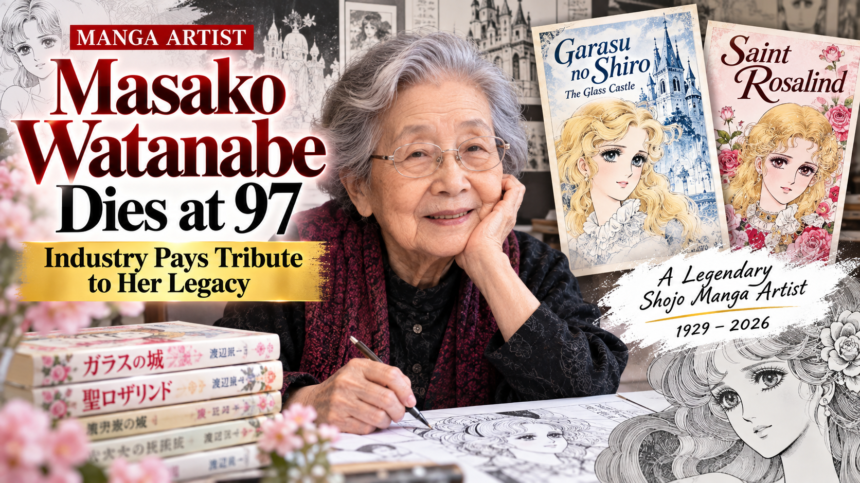
Veteran Japanese manga artist Masako Watanabe, celebrated for popular works such as Garasu no Shiro (The Glass Castle) and Saint Rosalind, died on October 3, 2026, at the age of 97. Her death was announced through her official X account. Following the announcement, the Margaret editorial department and fellow manga creators, including Yuki Suetsugu, Chie Shinohara and Motoka Murakami, paid tribute to her contributions to the manga industry.
Masako Watanabe’s Death Announced by Her Family
According to the statement shared on Watanabe’s official X account, she passed away peacefully at 12:38 a.m. on October 3. The message reflected on her 97-year life, which was closely connected to manga, and thanked readers for supporting and appreciating her work over the years.
The announcement also included a message written by Watanabe before her death. In it, she expressed heartfelt gratitude to her fans, colleagues, family, caregivers and everyone who had supported her throughout her life.
Looking back on her long journey as a manga artist, Watanabe described the memories she had created as precious treasures. She concluded her message with a personal note, inviting readers to imagine that she was in Paris whenever they missed her.
Margaret Editorial Team Pays Tribute to Her Contribution
The editorial department of Margaret expressed its sadness over Watanabe’s passing, highlighting her important role in the magazine’s history.
Watanabe had been contributing manga since Weekly Margaret began publication in 1963. Among her notable works, Garasu no Shiro received particular recognition for its sophisticated storytelling and dramatic narrative. According to the editorial team, the series captivated readers and played a significant role in the development of shojo manga.
The editors also acknowledged her influence during the magazine’s early years, noting how her stories helped shape the dreams and aspirations of generations of young readers. They expressed their appreciation for her achievements and extended their condolences following her death.
Fellow Manga Creators Remember Watanabe
Several prominent manga artists shared their memories of Watanabe and recognised her influence on the industry.
Yuki Suetsugu, the creator of Chihayafuru, recalled reading Watanabe’s horror and suspense stories during her childhood. She expressed surprise at the news of her death and reflected on the thoughtful farewell message Watanabe had left behind.
Chie Shinohara, known for creating Red River, also paid tribute to Watanabe, expressing gratitude to the pioneering artist whose work had been part of her own upbringing.
Motoka Murakami, the creator of JIN, remembered interviewing Watanabe more than a decade earlier for Fuichin Tsaichen!. During that conversation, Watanabe had shared experiences from the years following World War II, including visiting publishers while carrying her child on her back. Murakami described her as a respected senior artist who helped pave the way for modern shojo manga.
A Remarkable Career Spanning More Than 70 Years
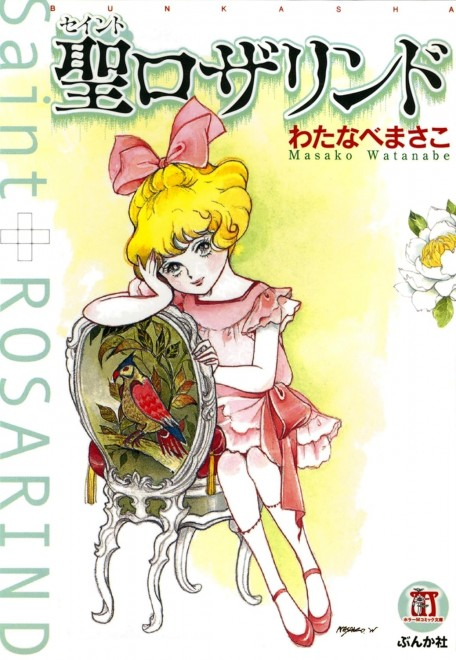
Born in 1929, Masako Watanabe began her career as a shojo manga artist in 1952. Over the decades, she produced numerous acclaimed works, including Garasu no Shiro and Saint Rosalind. Her Akujo Series and other stories also helped establish a distinctive approach to Japanese romantic mysteries featuring themes of love, conflict and hatred.
Her achievements earned her several major honours. In 2002, she received the Minister of Education, Culture, Sports, Science and Technology Award at the 31st Japan Cartoonists Association Awards. Four years later, in 2006, she became the first female manga artist to receive the Order of the Rising Sun, Gold Rays with Rosette.
Watanabe continued creating manga well into her later years. In 2020, at the age of 91 and 67 years after her debut, she began publishing the new series Himitsu: Himegoto weekly on the Manga Mee app. Her return to serialization attracted attention, with reports identifying her as the oldest active manga artist at the time.
Her other works included Hitori Matsuri, which was adapted for television, alongside numerous shojo manga and mystery stories. Through her extensive body of work and lasting influence on generations of creators and readers, Watanabe leaves behind a significant legacy in Japanese manga.
Disclaimer: This article is based on publicly reported information and official statements available at the time of writing. Details are provided for general informational purposes and may be updated if further information becomes available.