Millets are widely valued for their nutritional benefits, but the way they are processed may influence how they affect blood sugar levels. New health reporting published on October 19 highlights that polished millets may contain less fibre, potentially allowing the body to digest them more quickly than less-processed varieties.
How Processing Can Change Millets
Millets are often included in balanced diets because they provide carbohydrates, fibre and other nutrients. However, polishing removes some of the outer layers of the grain, which can reduce its fibre content.
Fibre plays an important role in digestion and can influence how quickly carbohydrates are absorbed. When a grain contains less fibre, its carbohydrates may be digested more rapidly, potentially affecting the body’s blood glucose response.
Why the Glycaemic Index Matters
The glycaemic index (GI) measures how quickly a carbohydrate-containing food raises blood glucose compared with a reference food. Foods with a higher GI generally cause a faster rise in blood sugar, although the response also depends on portion size and the overall meal.
This means that not all millet products necessarily have the same effect on blood glucose. The type of millet, its level of processing and how it is prepared can all make a difference.
Tips for Including Millets in a Balanced Diet
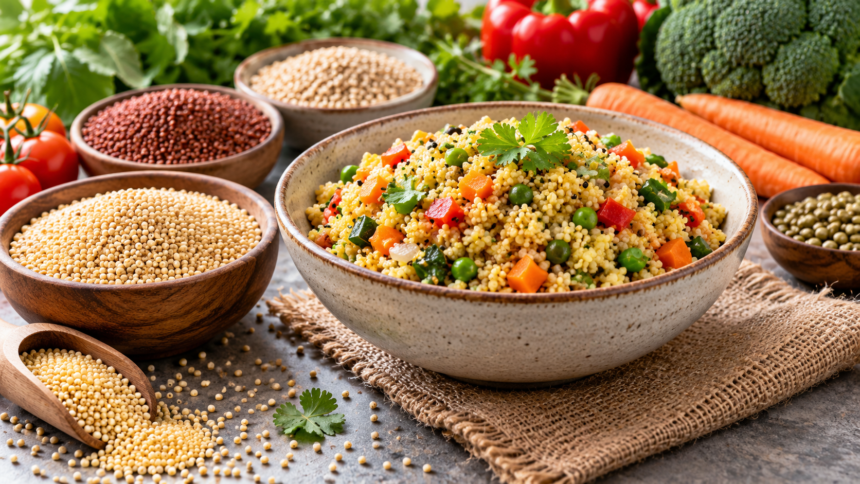
People who enjoy millets can consider less-refined varieties and include them alongside vegetables, pulses and other sources of protein. Portion size also matters, particularly for people managing diabetes or monitoring their blood glucose.
Millets can be part of a healthy eating pattern, but they should not automatically be considered low-GI foods simply because they are millets. Choosing less-processed grains and maintaining balanced meals can help support healthier eating habits.