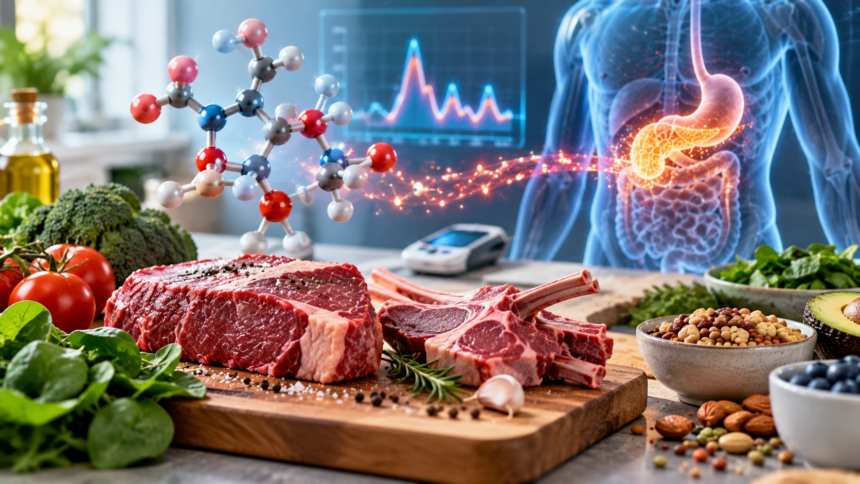
A large study involving nearly 90,000 adults has uncovered a possible connection between a little-known sugar found in red meat and the risk of developing type 2 diabetes. Researchers found that people with the highest estimated intake of this molecule had a 63% higher risk than those with the lowest intake.
The molecule, called N-glycolylneuraminic acid (Neu5Gc), occurs naturally in foods such as beef and lamb. Scientists are investigating whether it may trigger immune reactions and long-term inflammation that could contribute to diabetes.
The findings are preliminary and do not prove that this sugar causes the disease.
What Is This Unusual Sugar?
Neu5Gc is naturally produced by most mammals, but humans do not produce it because of an ancient genetic change. Small amounts can enter the human body through food, particularly red meat, and in lower amounts through some dairy products.
Once absorbed, the molecule can become incorporated into human tissues. Because the body does not naturally make Neu5Gc, the immune system may recognize it as foreign and produce antibodies against it.
Scientists are investigating whether this response can contribute to persistent inflammation, which is associated with several long-term health conditions, including type 2 diabetes.
What Did the Study Find?
Researchers analysed dietary and health information from 89,953 adults participating in a long-term French observational study. Participants had an average age of 42, and 79% were women.
Over a median follow-up of 7.2 years, 966 participants developed type 2 diabetes. Those in the highest group for estimated meat-derived Neu5Gc intake had a 63% higher risk of developing the condition than those in the lowest group. The association remained significant after accounting for several factors, including physical activity, diet quality, smoking and existing health conditions.
However, when researchers additionally adjusted for total red meat consumption, the association weakened and was no longer statistically significant. This means the researchers cannot yet separate the possible contribution of Neu5Gc from the effects of other components of red meat.
Why Inflammation Matters
Long-term inflammation may interfere with how the body responds to insulin, the hormone that helps regulate blood sugar. If the body becomes less responsive to insulin, blood glucose can rise, increasing the risk of type 2 diabetes.
The researchers suspect that immune reactions to Neu5Gc could be one possible part of this process, but further studies are needed to confirm the mechanism.
Interestingly, Neu5Gc intake from dairy products was not associated with a higher diabetes risk in this study. This suggests that the food source may matter, although the reason for the difference is not yet clear.
What Does This Mean for Everyday Diets?
The findings add to ongoing research into the relationship between red meat consumption and metabolic health. They do not establish a specific amount of red meat that causes diabetes, nor do they prove that avoiding Neu5Gc alone would prevent the disease.
Researchers say future studies should examine the immune response more directly and investigate whether choosing other protein sources, such as poultry or plant-based foods, changes long-term diabetes risk.
For now, the key takeaway is that one observational study cannot establish cause and effect. A balanced diet, regular physical activity and appropriate medical advice remain important parts of overall health.