A large study involving more than 461,000 adults has revealed that not all ultra-processed foods are associated with colorectal cancer risk in the same way. Researchers found that certain processed whole-grain and dairy products were linked to a lower risk, while processed meat products showed an association with increased risk.
What the Study Found
Researchers analysed dietary information from 461,682 adults aged 50 to 71, following participants for a median period of 18.8 years. During the study, 10,075 participants developed colorectal cancer.
Ultra-processed foods accounted for a median of 43% of participants’ daily calorie intake. Surprisingly, the researchers found no statistically significant association between overall ultra-processed food consumption and colorectal cancer risk.
Different Foods Showed Different Associations
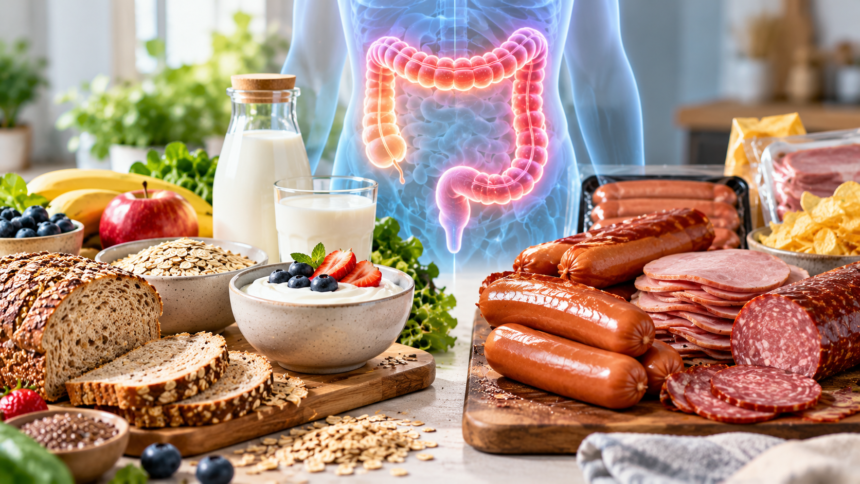
The findings revealed important differences between food categories. Ultra-processed whole-grain and dairy products were associated with a lower risk of colorectal cancer, while processed meat products were linked to a higher risk.
The study suggests that the nutritional composition of food may be important when evaluating its potential health effects, rather than relying only on whether it is classified as ultra-processed.
Overall Diet Quality Remains Important
Researchers also found that poor overall diet quality was associated with a higher risk of colorectal cancer, regardless of the amount of ultra-processed food consumed.
These findings reinforce the importance of a balanced eating pattern that includes fibre-rich foods, whole grains and nutritious dairy options, while limiting processed meat.