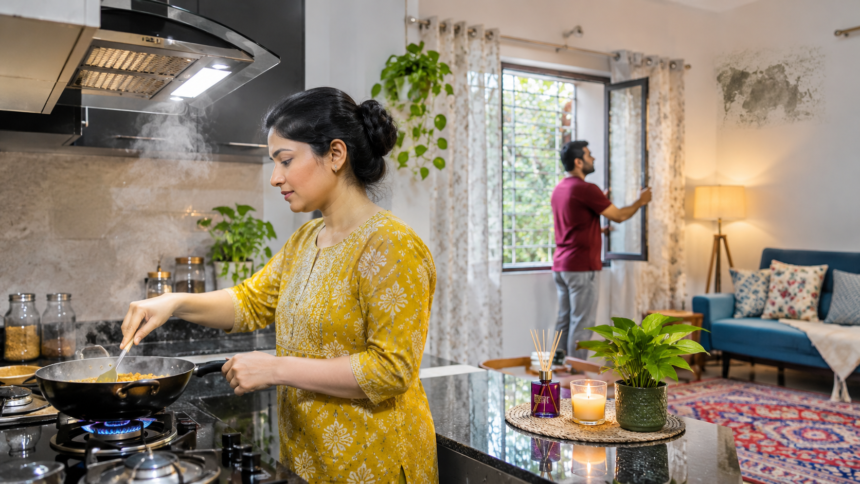
Indoor air pollution is not limited to outdoor smog or traffic emissions. Everyday household activities, cooking habits and commonly used cleaning products can also affect the quality of air inside homes, potentially increasing the risk of respiratory irritation and allergies.
Respiratory specialist has highlighted several overlooked sources of indoor pollution, warning that people may be exposed to harmful particles and chemicals even when they are inside their homes.
Cooking Smoke Can Affect Lung Health
Frying, grilling and cooking at high temperatures can release fine particles into indoor air. Gas stoves can also produce nitrogen dioxide, which may irritate the respiratory system.
Using a kitchen chimney or exhaust fan while cooking and maintaining proper ventilation can help reduce exposure.
Scented Candles and Air Fresheners May Release Chemicals
Many scented candles, room fresheners and household cleaning products release chemicals known as volatile organic compounds (VOCs).
Exposure to these substances may cause eye irritation, headaches and breathing difficulties, particularly among people with asthma or sensitive airways.
Choosing fragrance-free cleaning products and avoiding unnecessary sprays can help limit exposure.
Carpets and Curtains Can Collect Allergens
Household furnishings such as mattresses, rugs, curtains and upholstered sofas can collect dust, pollen and dust mites.
These particles may trigger sneezing, coughing and allergic reactions. Regular cleaning, washing bedsheets and vacuuming can help reduce the accumulation of indoor allergens.
Damp Walls Can Encourage Mould Growth
Leaking pipes, damp corners and poorly ventilated bathrooms can create conditions that encourage mould growth. Mould spores may worsen respiratory symptoms and allergies.
Repairing leaks, keeping wet surfaces dry and improving ventilation are important steps towards maintaining healthier indoor surroundings.
How to Maintain Cleaner Indoor Air
Simple household habits can make a difference. Use exhaust fans during cooking, clean frequently used surfaces, avoid excessive fragrance products and address dampness promptly.
A healthy home is not just about cleanliness and attractive interiors. Paying attention to indoor air quality is equally important for protecting the respiratory health of everyone living there.