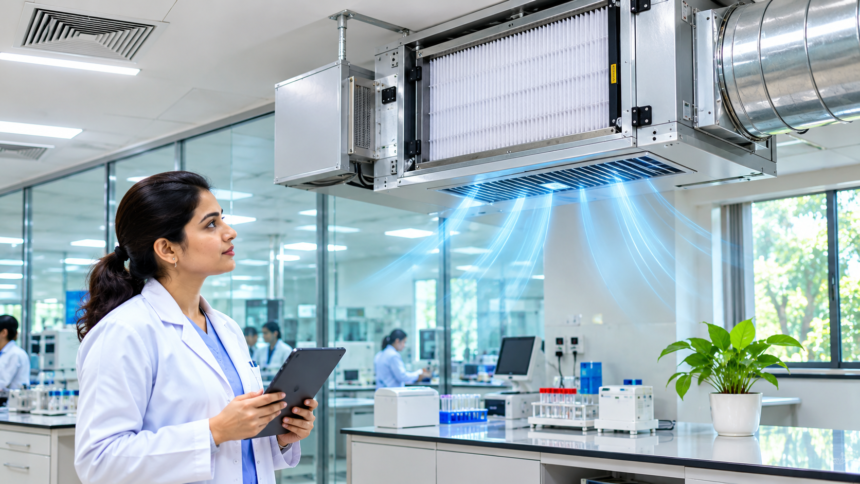
An antimicrobial air-filtration technology developed at the Indian Institute of Science (IISc) has moved beyond laboratory research and entered commercial use, marking an important development in India’s healthcare and air-quality technology sector.
The technology, initially developed during the COVID-19 pandemic, is now being applied in homes, hospitals, diagnostic laboratories and commercial buildings.
From Research to Real-World Applications
The technology was developed at IISc as part of efforts to address concerns about airborne microbes during the pandemic.
After its research and development phase, the air-filtration solution has progressed towards practical applications in different indoor environments.
Its adoption reflects growing interest in technologies that can support cleaner indoor air in both residential and healthcare settings.
Hospitals and Laboratories Among Key Users
The technology is being used in several types of facilities, including:
- Hospitals and healthcare centres.
- Diagnostic laboratories.
- Residential buildings.
- Commercial buildings.
- Central air-conditioning systems.
These applications highlight the potential role of advanced filtration technologies in indoor air management.
Why Antimicrobial Air Filtration Matters
Indoor air quality is an important public health concern, particularly in healthcare facilities where patients, medical professionals and visitors share indoor spaces.
Air-filtration technologies designed to address airborne microbes may provide an additional layer of support alongside ventilation, hygiene and established infection-control practices.
A Step Forward for India’s Healthcare Innovation
The transition of IISc’s research into commercial applications demonstrates how scientific research can contribute to practical solutions.
As interest in indoor air quality continues, antimicrobial filtration technology could become an important area of innovation for healthcare infrastructure and building management.