A new study conducted by researchers from the Indian Council of Medical Research–National Institute of Nutrition (ICMR-NIN), Hyderabad, has raised concerns about vitamin B1 deficiency among pregnant and breastfeeding women in Northeast India.
The research found that approximately one in five women surveyed in Assam’s Barak Valley and neighbouring districts of Tripura had inadequate levels of thiamine, commonly known as vitamin B1.
The findings highlight the importance of maternal nutrition and the need to identify nutritional deficiencies that may remain unnoticed during pregnancy and the breastfeeding period.
More Than 1,000 Women Included in the Research
The study, titled Re-Emergence of Thiamine Deficiency Among Pregnant and Lactating Women in Northeast India, examined 1,083 women across 120 villages.
Researchers collected data during 2023–2024 from communities where cases of beriberi, a disease associated with severe thiamine deficiency, had previously been documented.
Two different laboratory methods were used to assess vitamin B1 levels. The results showed that 20.1% of participants had suboptimal thiamine status.
This included:
- 4.9% with thiamine deficiency.
- 15.2% with marginal thiamine levels.
A second assessment method produced a similar overall finding, with 20.6% showing suboptimal status.
Why Is Vitamin B1 Important?
Thiamine is an essential water-soluble vitamin that helps the body convert carbohydrates into energy. It also supports normal functioning of the nervous system, muscles and heart.
The body cannot produce sufficient thiamine on its own, so it needs to obtain this nutrient through food.
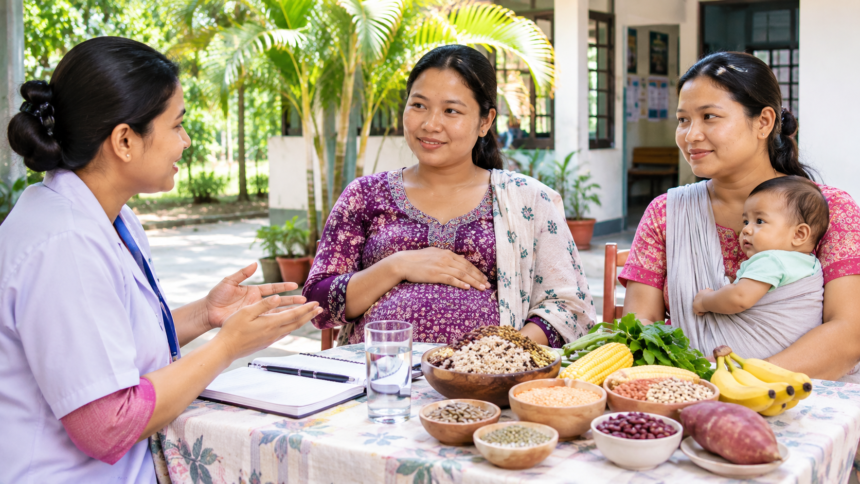
Foods that naturally contain vitamin B1 include whole grains, pulses, nuts, seeds and certain other foods. A varied and balanced diet helps support adequate nutritional intake.
Severe deficiency can cause beriberi, which may affect the nervous system and cardiovascular system.
Pregnant Women Need Particular Nutritional Attention
The study found that suboptimal thiamine levels were more common among pregnant women than among lactating women.
Researchers highlighted dietary monotony and limited nutritional variety as possible factors that need further attention. The findings suggest that maternal nutrition programmes should consider deficiencies beyond commonly discussed nutrients.
Vitamin B1 is particularly important because inadequate levels can affect essential bodily functions, making early identification of deficiency an important public-health concern.
Researchers Call for Targeted Nutrition Interventions
The researchers have emphasised the need for targeted nutrition interventions in communities where thiamine deficiency has previously been reported.
Improving dietary diversity, strengthening nutritional awareness and identifying vulnerable populations could help address the problem.
The study also highlights the importance of regular nutritional assessment as part of maternal healthcare, particularly in regions with a history of deficiency-related conditions.
What the Findings Mean for Public Health
The research draws attention to a nutritional issue that may receive less attention than iron, calcium and other commonly discussed nutrients.
Although the findings relate to specific communities in Northeast India and cannot automatically be applied to the entire country, they provide important evidence for improving maternal nutrition programmes.
The study reinforces the need for balanced diets, better nutritional monitoring and region-specific healthcare interventions to protect maternal and infant health.