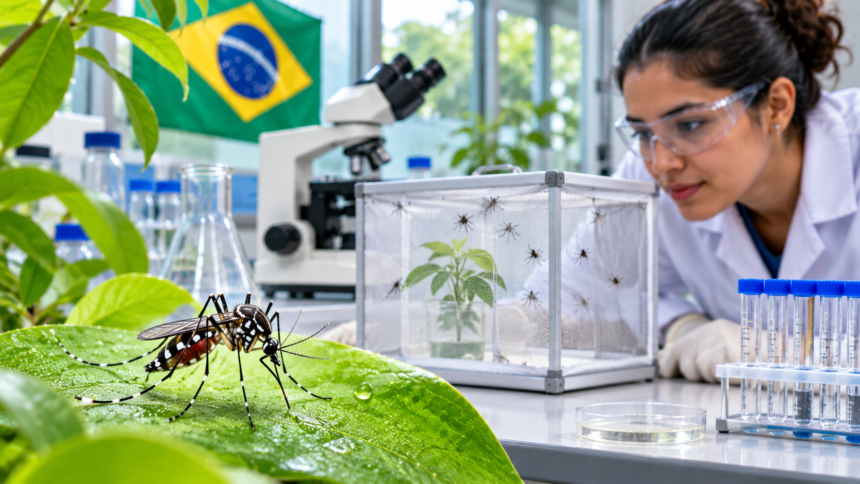
Scientists have reported promising results from a new approach to controlling dengue, with a four-year study in Brazil finding that specially bred mosquitoes carrying Wolbachia bacteria were associated with a 69% reduction in dengue and chikungunya infections among schoolchildren.
The research involved more than 5,700 children living in Belo Horizonte, Brazil. The findings were reported at a meeting of the American Society of Tropical Medicine and Hygiene.
How Wolbachia Mosquitoes Work
Wolbachia is a naturally occurring bacterium found in many insects. Scientists introduce it into specially bred Aedes mosquitoes because it reduces their ability to transmit certain viruses, including dengue and chikungunya.
When these mosquitoes reproduce, female mosquitoes can pass the bacteria to their offspring, helping Wolbachia become established in the local mosquito population.
Study Shows Promising Results
Researchers compared neighbourhoods where Wolbachia-carrying mosquitoes had been released with similar areas where they had not. Both groups received the same pesticide and other mosquito-control measures.
The study found approximately 69% fewer dengue and chikungunya infections among children in areas where the specially bred mosquitoes were released. The reduction remained evident even during Brazil’s severe dengue outbreak in 2024.
Could This Help Control Dengue Worldwide?
Researchers believe the approach could become an important addition to existing mosquito-control programmes. It may help communities reduce infections alongside conventional prevention measures.
However, scientists emphasise that further research and continued monitoring are important. The study also did not establish whether the method reduced Zika infections because there were too few cases to draw a conclusion.
The findings offer encouraging evidence that biological mosquito-control strategies could play a greater role in protecting communities from mosquito-borne diseases.