

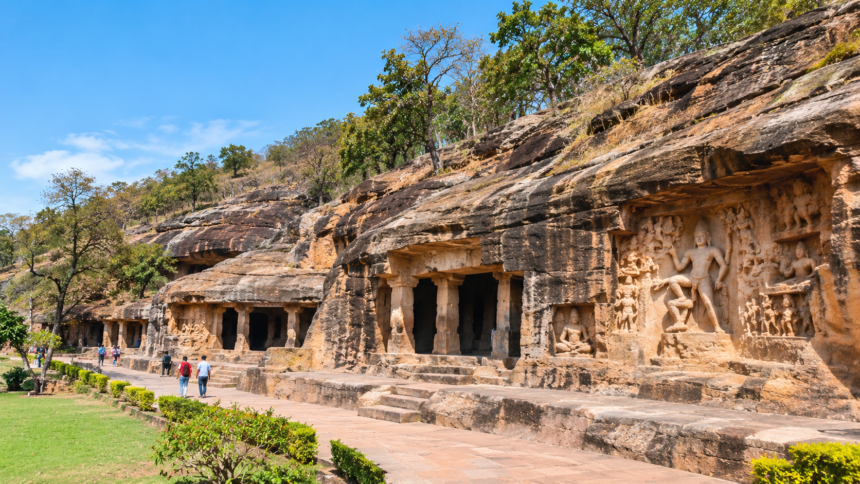
The historic Udayagiri Caves in Madhya Pradesh are attracting renewed attention following their inclusion in India’s UNESCO World Heritage Tentative List. Located in Vidisha district, the ancient rock-cut complex offers visitors an opportunity to explore India’s Gupta-period architecture, religious traditions and remarkable sculptural heritage.
A Historic Complex Dating Back to the Gupta Period
The Udayagiri Caves were developed primarily between the late 4th and early 5th centuries CE under Gupta patronage. The site contains 20 rock-cut caves featuring ancient shrines, inscriptions and detailed sculptures that reflect the artistic achievements of that period.
Famous Varaha Sculpture Is a Major Attraction
One of the most remarkable highlights is the monumental Varaha sculpture in Cave 5, depicting Lord Vishnu in his boar incarnation rescuing the Earth goddess. Cave 13 also features an important sculpture of Vishnu reclining on the cosmic serpent.
Opportunity to Explore Nearby Heritage Destinations
Udayagiri’s location near Sanchi makes it an attractive addition to Madhya Pradesh’s heritage tourism circuit. Travellers can explore the region’s ancient monuments, archaeological sites and historical landscapes as part of a wider cultural journey.
UNESCO Recognition Could Strengthen Tourism
Inclusion in the UNESCO Tentative List is an important preliminary step towards possible World Heritage nomination. However, it does not mean that the caves have received final UNESCO World Heritage Site status. The recognition is expected to increase awareness of the site’s historical importance among domestic and international travellers.