

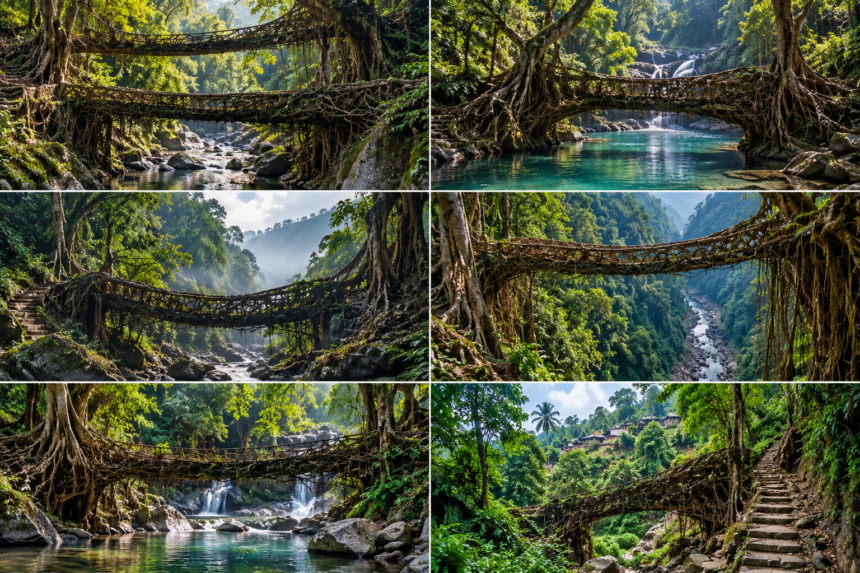
Meghalaya is famous for its waterfalls, forests and mist-covered hills, but some of its most remarkable attractions are created by nature and shaped by generations of human effort. The state’s living root bridges are a perfect example of this unique relationship between people and the environment.
Unlike conventional bridges made from concrete, steel or wood, these structures are formed by carefully guiding the aerial roots of Indian rubber trees across streams and rivers. The roots are trained and supported over many years until they become strong enough to carry people.
Traditionally developed and maintained by the Khasi and Jaintia communities, living root bridges can continue growing and becoming stronger when properly cared for. Meghalaya is believed to have around 100 known examples spread across different parts of the state.
If you are planning a Meghalaya holiday and want to experience these extraordinary natural structures, here are six living root bridges and bridge areas worth exploring.
1. Nongbareh Living Root Bridge
Located in the East Jaintia Hills, the Nongbareh Living Root Bridge is notable for its distinctive double-span design.
The bridge stretches across the Amayalee River and forms part of the route towards the Umngot River. Thought to be more than a century old, it demonstrates how local communities have patiently shaped tree roots into useful pathways over generations.
While visiting the bridge, travellers can also explore the nearby Shmia Syntem area along the pathways around the Umngot River.
2. Padu Living Root Bridge
For travellers who prefer quieter and less crowded attractions, the Padu Living Root Bridge is an interesting choice.
Situated near Nongtalang village, roughly 10 km from Amlarem, the bridge is known for its unusual network of aerial roots. The journey also offers opportunities to enjoy Meghalaya’s natural scenery, including orange groves and waterfalls.
Its relatively lesser-known status makes Padu a good option for visitors who want to explore beyond the state’s most popular tourist spots.
3. Sohra Living Root Bridges
The Sohra region, better known as Cherrapunji, is home to several impressive living root bridges, including both single-decker and double-decker examples.
Surrounded by dense greenery, forests and dramatic landscapes, these bridges showcase the traditional knowledge used by local communities to work with living trees.
Reaching many of the bridges involves walking through natural terrain, making the experience especially appealing to travellers who enjoy hiking, forests and offbeat sightseeing.
4. Kudeng Rim Living Root Bridge
Another fascinating attraction in East Jaintia Hills is the Kudeng Rim Living Root Bridge.
Positioned high above the river, the bridge provides beautiful views of the surrounding landscape. Its location also makes it possible to combine the visit with nearby natural attractions.
One of the highlights in the area is Krangsuri Falls, allowing travellers to experience both Meghalaya’s unique root bridges and its spectacular waterfalls during the same trip.
5. Kudeng Thymmai Living Root Bridge
The Kudeng Thymmai Living Root Bridge is another scenic example found in East Jaintia Hills.
The surrounding landscape is filled with greenery and waterfalls, creating a peaceful setting for visitors interested in Meghalaya’s lesser-known natural and cultural attractions.
Exploring Kudeng Thymmai can be a rewarding addition to an itinerary focused on the region’s traditional root bridges and offbeat destinations.
6. Mawlynnong Living Root Bridge
The Mawlynnong area is also home to a single-level living root bridge that showcases the remarkable skill involved in creating these natural structures.
Visitors can reach the bridge by taking a flight of steep steps located around 3 km before Mawlynnong. Although the climb can require some effort, the experience offers an opportunity to see firsthand how living trees have been transformed into functional bridges.
A visit to the root bridge can easily be combined with sightseeing around Mawlynnong and its surrounding attractions.
Why Meghalaya’s Living Root Bridges Are Worth Visiting
Meghalaya’s living root bridges are much more than scenic tourist attractions. They represent a traditional form of sustainable engineering that has been passed down through generations.
Instead of replacing nature with construction materials, local communities learned to work with growing trees and guide their roots into useful structures. Because the bridges remain alive, they can continue developing over time with regular care and maintenance.
For travellers, visiting these bridges offers a chance to experience Meghalaya from a different perspective—one that combines nature, local traditions, adventure and indigenous knowledge.
So, if you are planning a trip to Meghalaya, consider going beyond the famous waterfalls and viewpoints. A walk across one of these remarkable living root bridges can become one of the most memorable experiences of your journey.