
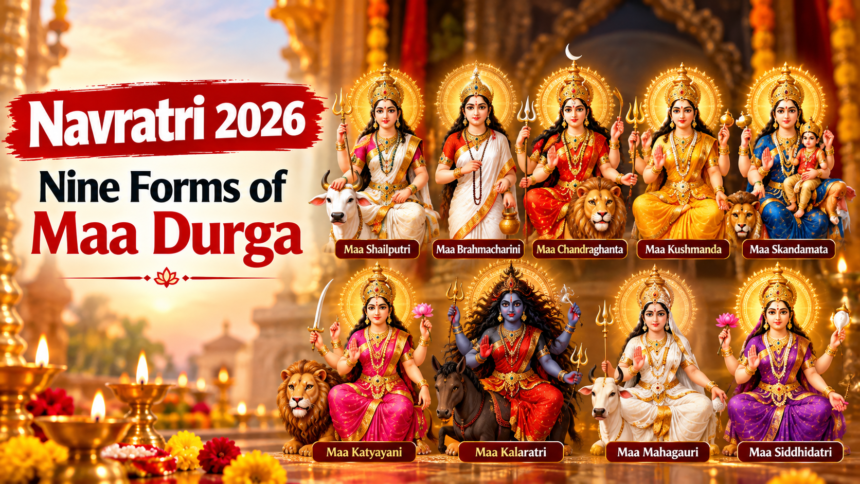
Shardiya Navratri 2026 begins on October 11, marking the start of nine days dedicated to the worship of Maa Durga and her nine manifestations, collectively known as Navadurga. Each form of the Goddess represents different aspects of divine feminine energy, including courage, patience, protection, compassion, wisdom and spiritual growth.
During the festival, devotees worship one form of Maa Durga each day, following traditional rituals and offering prayers for happiness, prosperity and well-being. Understanding the significance of the nine forms can help devotees connect more deeply with the spiritual message of Navratri.
From Maa Shailputri, who symbolises strength and new beginnings, to Maa Siddhidatri, associated with wisdom and spiritual fulfilment, each manifestation carries a distinct meaning.
Nine Forms of Maa Durga and What They Represent
1. Maa Shailputri: Strength and New Beginnings
Worshipped on the first day of Navratri, Maa Shailputri is known as the daughter of the mountains. She represents stability, devotion and inner strength. Her association with the Himalayas symbolises the ability to remain firm even when facing difficulties.
Devotees seek her blessings for courage, mental clarity and the confidence to begin new chapters in life.
2. Maa Brahmacharini: Patience and Discipline
The second form, Maa Brahmacharini, represents dedication, penance and self-control. Her worship highlights the importance of remaining committed to a goal, even when progress takes time.
Devotees pray to her for patience, determination, emotional balance and the discipline needed to overcome challenges.
3. Maa Chandraghanta: Courage and Protection
Maa Chandraghanta is recognised by the crescent moon shaped like a bell on her forehead. Her form represents bravery, alertness and the power to confront difficulties while protecting others.
Her blessings are traditionally sought for fearlessness, peace of mind and protection during challenging situations.
4. Maa Kushmanda: Creation and Vitality
Maa Kushmanda is associated with the creative energy believed to sustain the universe. She symbolises life, optimism and the power to create and nurture new possibilities.
Devotees worship her for good health, energy, creativity and prosperity in their personal and family lives.
5. Maa Skandamata: Motherhood and Compassion
Maa Skandamata, the mother of Lord Skanda, represents maternal love, wisdom and protection. Her form reflects the importance of caring for loved ones while maintaining inner strength.
Devotees seek her blessings for family happiness, harmonious relationships, wisdom and the well-being of their children.
6. Maa Katyayani: Determination and Justice
Maa Katyayani is a powerful manifestation of the Goddess associated with the destruction of evil and the protection of righteousness. She represents determination and the courage to take action when difficult decisions are necessary.
Her devotees pray for confidence, strength in challenging circumstances and the ability to stand up for what is right.
7. Maa Kalaratri: Fearlessness and the Removal of Negativity
Maa Kalaratri is known for her formidable appearance and protective nature. She represents the destruction of harmful forces and the strength required to overcome fear and adversity.
Devotees seek her blessings for courage during difficult times, resilience and freedom from negative influences.
8. Maa Mahagauri: Peace and Purity
Maa Mahagauri symbolises purity, serenity, compassion and renewal. Her worship is associated with finding inner peace, letting go of resentment and moving forward after difficult experiences.
Devotees pray to her for harmony in relationships, emotional peace and fresh beginnings.
9. Maa Siddhidatri: Wisdom and Spiritual Fulfilment
Maa Siddhidatri is the ninth form of Navdurga and represents wisdom, spiritual accomplishments and the fulfilment of sincere aspirations. Her worship marks the culmination of the nine-day journey of devotion.
Devotees seek her blessings for spiritual progress, sound judgement, meaningful achievements and the wisdom to use their abilities responsibly.
How to Make Navdurga Worship More Meaningful During Navratri 2026
Each form of Maa Durga offers devotees an opportunity to reflect on a particular quality and its importance in everyday life. Courage can help people face uncertainty, patience can support long-term goals, and compassion can strengthen family relationships.
Devotees may observe the nine days through daily aarti, mantra chanting, fasting and other rituals according to their family traditions.
The worship of Navdurga represents the many expressions of Shakti, the divine feminine power. Through the nine manifestations, Maa Durga is revered as a source of strength, a protector, a nurturing mother and a giver of wisdom.
As Shardiya Navratri begins on October 11, devotees can use the festival as an opportunity to deepen their faith and reflect on the qualities represented by each form of the Goddess.
Disclaimer
This article is intended for general informational and educational purposes. The descriptions of Maa Durga’s nine forms and their spiritual significance are based on traditional Hindu beliefs and devotional interpretations. Practices and interpretations may vary across regions, communities and families. Readers may follow the customs and religious traditions appropriate to their beliefs.