Navratri Day 5 will be observed on Thursday, October 15, 2026, in honour of Maa Skandamata, the fifth form of Goddess Durga. She is worshipped as the mother of Lord Kartikeya, also known as Skanda. Devotees pray to the goddess for wisdom, prosperity, courage, inner strength and protection from difficulties.
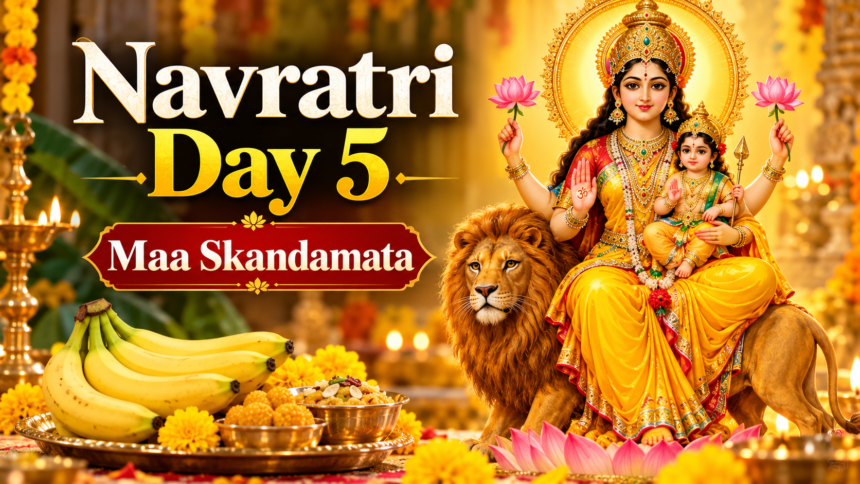
Yellow is the traditional colour associated with the fifth day of Navratri, symbolising happiness, optimism and spiritual brightness. Bananas are commonly offered as bhog, while yellow sweets and banana halwa are also popular offerings. Devotees observe special puja rituals, chant sacred mantras and listen to the story of Maa Skandamata to seek her blessings.
Navratri Day 5: Date, Colour and Bhog
The fifth day of Navratri falls on Thursday, October 15, 2026. The day is dedicated to Maa Skandamata, who represents maternal love, compassion and divine protection.
- Date: Thursday, October 15, 2026
- Colour of the day: Yellow
- Bhog: Bananas, yellow sweets or banana halwa
Yellow is associated with warmth, joy, positivity and spiritual illumination. Offering bananas and other traditional sweets is considered an important part of the day’s worship.
Who Is Maa Skandamata? Significance and Symbolism
Maa Skandamata is the fifth form of Goddess Durga worshipped during the nine-day festival of Navratri. Her name is derived from two words: Skanda, another name for Lord Kartikeya, and Mata, meaning mother.
The goddess is commonly depicted with four arms and three eyes, seated on a lotus. This form is also known as Padmasana Devi. She is associated with a lion, which represents courage and divine power. In her iconography, she carries infant Lord Skanda in one arm, holds lotus flowers in two hands and displays the Abhaya Mudra with the fourth hand, symbolising fearlessness and blessings.
Her form reflects a mother’s unconditional love, care and protective strength. Devotees believe that worshipping Maa Skandamata brings the blessings of both Goddess Durga and Lord Kartikeya.
The goddess is also associated with the Vishuddha Chakra, or throat chakra, which is linked to purity, wisdom and clear communication. Her devotees seek her grace for peace, prosperity, knowledge, courage and strength to overcome life’s challenges.
A well-known temple dedicated to Maa Skandamata is located in Kashi, also known as Varanasi, in Uttar Pradesh.
Maa Skandamata Puja Vidhi for Navratri Day 5
Devotees can follow these traditional steps to worship Maa Skandamata on the fifth day of Navratri.
- Begin with morning rituals: Wake up early, take a bath and wear clean clothes. Yellow attire is traditionally preferred on this day.
- Prepare the puja area: Clean the place of worship and sprinkle Ganga Jal for purification. If Ghatasthapana was performed on the first day, continue the worship using the existing arrangement.
- Place the goddess’s idol or picture: Position an idol or image of Maa Skandamata, depicted with Lord Skanda on her lap, on a clean wooden platform or altar.
- Make the offerings: Offer water, roli, akshat (turmeric rice) and fresh flowers. Lotus flowers or yellow flowers are traditionally preferred.
- Light the diya: Light a ghee lamp and burn dhoop or incense as part of the ritual.
- Offer bhog: Present bananas as the main offering. Sweets or kheer may also be offered according to family traditions.
- Chant the mantra: Recite Maa Skandamata’s main mantra 108 times with devotion.
These rituals are traditionally performed to express faith and seek the goddess’s blessings.
Maa Skandamata Mantra and Katha
Main mantra
ॐ देवी स्कन्दमातायै नमः॥
English transliteration: Om Devi Skandamatayai Namah
Meaning: I bow to Goddess Skandamata, the mother of Lord Skanda.
Alternative mantra
सिंहासनगता नित्यं पद्माञ्चित करद्वया।
शुभदास्तु सदा देवी स्कन्दमाता यशस्विनी॥
English transliteration: Simhasanagata Nityam Padmanchita Karadvaya. Shubhadastu Sada Devi Skandamata Yashasvini.
Meaning: May the glorious Goddess Skandamata, seated on a lion or lotus throne and holding lotus flowers, always bless us with auspiciousness and grace.
Maa Skandamata Katha: The Story Behind Navratri Day 5
According to Hindu mythology, after Goddess Sati immolated herself, Lord Shiva withdrew into deep meditation. During this period, the demon Tarakasura performed intense penance to please Lord Brahma and obtain a boon. The boon made him vulnerable only to a son of Lord Shiva.
Concerned about the threat posed by Tarakasura, the gods sought assistance from Lord Vishnu and other deities. They wanted Sati to be reborn as Parvati, the daughter of King Himavat, so that she could eventually marry Shiva. Through intense penance and devotion, Parvati won Shiva’s heart, and the two were married.
Their divine union led to the birth of Lord Skanda, also known as Kartikeya. He grew into a powerful warrior, became the commander of the divine army and defeated Tarakasura, restoring peace to the cosmos.
Because of Parvati’s loving and protective role as Skanda’s mother, she came to be worshipped as Maa Skandamata.
Devotees believe that praying to Maa Skandamata on the fifth day of Navratri brings courage, wisdom, prosperity and divine protection. Her worship is also associated with strengthening faith, promoting inner peace and helping devotees face life’s challenges with confidence.
Disclaimer: This article is intended for general informational purposes and describes religious beliefs, traditions and customary practices associated with Navratri. Rituals, offerings and interpretations may vary across regions, temples and families. Devotees may follow the customs observed in their own traditions.