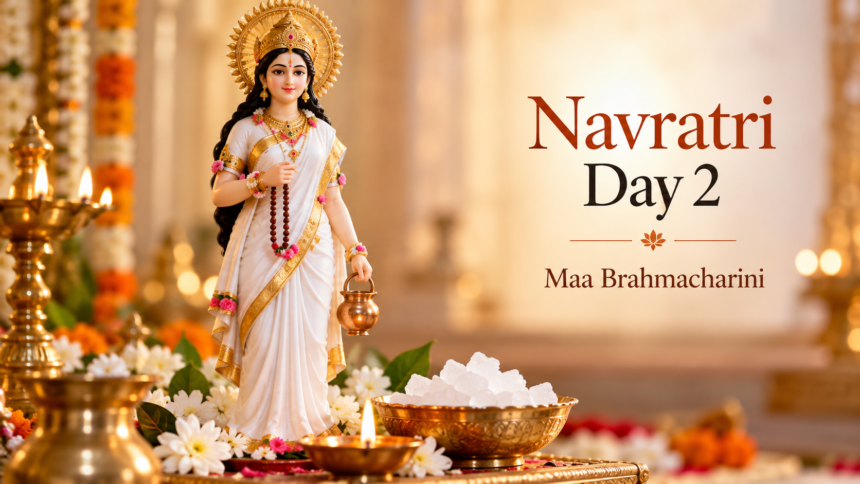
The second day of Sharadiya Navratri falls on Monday, October 12, 2026, and is dedicated to Maa Brahmacharini, the second form of Goddess Durga. She symbolises devotion, patience, determination and self-control. Devotees worship the goddess to seek spiritual wisdom, inner strength and the ability to face life’s challenges with perseverance.
White is the traditional colour associated with Navratri Day 2, representing peace and simplicity. Sugar or mishri is commonly offered to Maa Brahmacharini as bhog. The day’s worship includes prayers, flower offerings, mantra chanting and other rituals performed according to family and regional traditions.
Maa Brahmacharini’s story centres on Goddess Parvati’s dedication and intense penance to attain Lord Shiva. Her unwavering commitment is remembered as an example of discipline and faith. Here is everything to know about Navratri Day 2, including the date, puja vidhi, mantras, bhog and religious significance.
Navratri Day 2, October 12: Date, Colour and Bhog
The second day of Navratri is devoted to Maa Brahmacharini. The key details of the day’s observance are as follows:
- Date: Monday, October 12, 2026
- Navratri day: Day 2
- Goddess worshipped: Maa Brahmacharini
- Navratri colour: White
- Traditional bhog: Sugar or mishri
- Main significance: Devotion, penance, patience and self-discipline
Puja timings and the relevant tithi may vary according to the local Panchang. Devotees can follow the timings and customs traditionally observed in their region.
Who Is Maa Brahmacharini? Know Her Religious Significance
Maa Brahmacharini represents the ascetic form of Goddess Parvati and is associated with tapasya, or intense spiritual penance. According to Hindu tradition, Parvati undertook rigorous austerities to demonstrate her devotion to Lord Shiva. Her determination and dedication are central to the significance of Maa Brahmacharini’s worship during Navratri.
The name Brahmacharini is associated with a life of spiritual discipline and restraint. In traditional images, the goddess is depicted wearing white garments and holding a japamala, or rosary, in one hand and a kamandalu, or water pot, in the other. These symbols represent meditation, simplicity, devotion and self-control.
Worshipping Maa Brahmacharini is traditionally associated with seeking patience, wisdom and the strength to remain committed to one’s goals, even during difficult circumstances.
Maa Brahmacharini Puja Vidhi for Navratri Day 2
Devotees can perform Maa Brahmacharini puja at home by following their usual Navratri traditions. Elaborate arrangements are not necessary, as sincerity and devotion are central to the observance.
The customary puja vidhi for October 12 includes the following steps:
- Prepare the puja area: Bathe, clean the prayer space and place an idol or picture of Maa Brahmacharini.
- Continue kalash worship: Those who performed Ghatasthapana on the first day can continue the daily rituals according to their family traditions.
- Light a diya: Light an oil lamp and incense while observing normal household safety precautions.
- Offer flowers and puja items: Present fresh flowers, akshat (rice grains), sandalwood paste and other customary offerings.
- Present bhog: Offer sugar, mishri or another suitable sattvic food item to the goddess.
- Chant the mantra: Recite Maa Brahmacharini’s mantra with concentration and devotion.
- Perform aarti: Conclude the worship with aarti and prayers for peace, wisdom and inner strength.
- Distribute prasad: Share the offering with family members after completing the puja.
Those observing a Navratri fast can follow their customary fasting practices while considering their individual health and circumstances. Rituals may differ between families and communities.
Maa Brahmacharini Mantra and Katha
Mantra chanting is an important part of the second day’s worship. Devotees recite Maa Brahmacharini’s mantra while praying for spiritual progress, concentration, patience and determination.
Maa Brahmacharini Mantra
ॐ देवी ब्रह्मचारिण्यै नमः॥
English transliteration: Om Devi Brahmacharinyai Namah.
Meaning: I bow to Goddess Brahmacharini, the divine form representing penance, devotion and spiritual discipline.
Devotees may chant the mantra 11, 21 or 108 times, depending on their personal practice. These repetition counts follow devotional traditions and are not compulsory for everyone.
Maa Brahmacharini Dhyana Mantra
Dadhana Karapadmabhyam Akshamala Kamandalu,
Devi Prasidatu Mayi Brahmacharinyanuttama.
This traditional verse describes Maa Brahmacharini holding a rosary and a kamandalu in her hands and seeks the goddess’s grace and blessings.
Maa Brahmacharini Katha: The Story Behind Day 2
According to Hindu tradition, Maa Brahmacharini’s story recalls the intense penance undertaken by Goddess Parvati to attain Lord Shiva as her husband. Despite the hardships involved in her spiritual journey, Parvati remained firmly committed to her purpose.
Her dedication and perseverance became enduring symbols of devotion, patience and self-discipline. The story is remembered during Navratri to highlight the importance of remaining steadfast while pursuing meaningful goals.
Through the worship of Maa Brahmacharini, devotees seek inspiration to face difficulties with faith, make decisions with clarity and continue working towards their goals with determination.
Disclaimer: This article is intended for general informational purposes and describes religious beliefs, traditional practices and devotional customs associated with Navratri. Puja procedures, timings and observances may vary according to regional traditions and individual family practices. Devotees should consult their local Panchang or follow the guidance customary in their community for specific ritual timings.