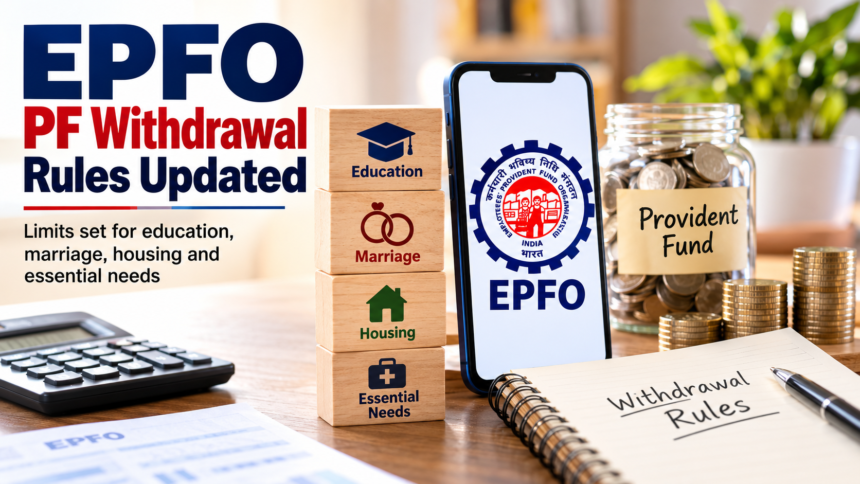
The Employees’ Provident Fund Organisation (EPFO) has outlined rules governing advance withdrawals from Provident Fund (PF) accounts for different financial needs. These provisions cover essential expenses, education, marriage, housing and certain special circumstances, with withdrawal limits varying according to the purpose.
The guidelines divide advance withdrawals into three broad categories: essential needs, housing requirements and special circumstances. Understanding these categories can help EPF members determine how often they may access their accumulated savings for eligible expenses.
EPF Withdrawal Rules for Education, Medical Treatment and Marriage
EPF members can use their PF savings to meet several personal and family expenses, subject to the applicable eligibility conditions.
Education expenses: Members can make up to 10 withdrawals during their EPF membership for education-related costs. The facility covers the education of the member and eligible family members.
Medical treatment: Under the essential-needs category, members can apply for PF advances to cover medical treatment for themselves and eligible family members. The provided guidelines state that there is no fixed limit on the number of withdrawals for medical purposes, subject to the applicable rules.
Marriage expenses: Members can make up to five withdrawals during their EPF membership for marriage-related expenses. This provision covers the member’s marriage and eligible family members’ marriages.
The number of permitted withdrawals does not automatically determine how much money a member can receive. Other eligibility conditions and applicable withdrawal limits may also apply.
How Many Times Can You Withdraw PF for Housing?
EPF members can use advance withdrawals for certain housing-related expenses, including:
- Purchasing a house or flat.
- Constructing a residential property.
- Repaying a home loan.
- Repairing or improving a residential property.
According to the provided guidelines, members can make up to five withdrawals for housing-related purposes during their EPF membership. These provisions allow eligible members to use their PF savings for major housing expenses while keeping limits on the frequency of withdrawals.
The amount available and the conditions for each withdrawal depend on the specific purpose and the applicable EPFO rules.
Can You Withdraw 75% of Your PF Balance?
The provided information states that an employee can withdraw up to 75% of the PF amount, including interest earned, after completing 12 months of membership.
However, the conditions for withdrawing 75% of a PF balance can vary according to the type of withdrawal and the applicable EPFO provisions. Members should confirm the eligibility criteria and current rules before applying.
PF savings are intended to support employees’ long-term financial security. Understanding the withdrawal provisions can help members plan for education, medical treatment, marriage and housing expenses without overlooking the conditions attached to their accounts.
Disclaimer: This article is intended for general informational purposes only and should not be treated as financial or legal advice. PF withdrawal limits, eligibility requirements and applicable conditions may vary depending on the purpose of withdrawal and current EPFO rules. Members should consult the official EPFO website or their employer’s PF department for the latest verified information before submitting a withdrawal claim.