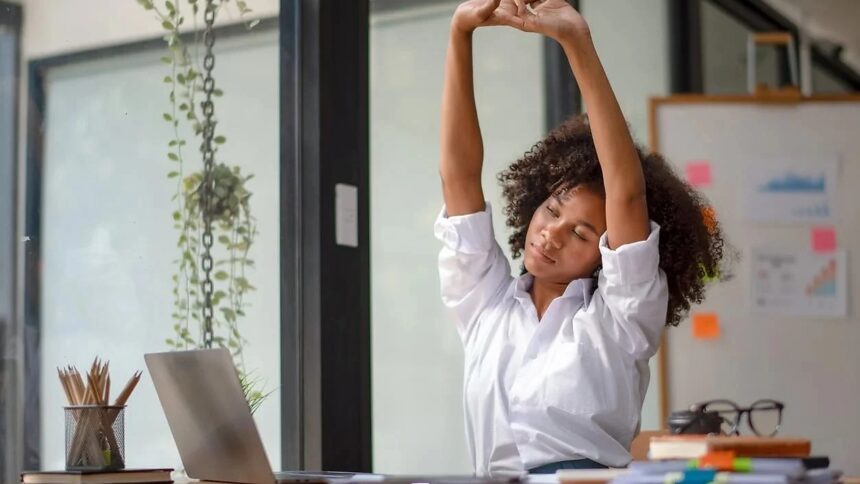
Long hours at a desk, repeated computer use and limited movement can contribute to stiffness in the neck, shoulders, back and hips. For women managing demanding work schedules, finding time for physical activity can be challenging, especially during a busy office day.
Chair yoga and simple desk stretches offer a convenient way to introduce movement into your work routine. These gentle exercises can help improve flexibility, ease everyday muscle tension and encourage better movement habits without requiring a yoga mat or a dedicated workout space.
From seated spinal movements to standing chest stretches, here are five yoga poses you can try at your workplace.
1. Seated Cat-Cow Pose (Marjaryasana-Bitilasana Variation)
<text color=”secondary” size=”sm”>Best for: Gentle spinal movement and back stiffness</text>
Sitting for extended periods can leave the back feeling stiff, particularly when you remain in the same position for hours. The seated Cat-Cow movement gently takes your spine through arching and rounding motions while encouraging you to coordinate movement with your breathing.
How to perform it
- Sit upright on a stable chair with your feet flat on the floor and your hands resting on your knees.
- Inhale gently, lift your chest and roll your shoulders back without forcing your lower back into an arch.
- Exhale, round your upper back slightly and bring your chin gently towards your chest.
- Continue moving slowly between the two positions, coordinating each movement with your breath.
- Repeat for 8–10 comfortable breaths.
Workplace tip: Keep the movements gentle and avoid pushing your neck or back beyond a comfortable range.
2. Seated Figure-Four Stretch (Chair Pigeon Variation)
<text color=”secondary” size=”sm”>Best for: Stretching the outer hips and gluteal muscles</text>
Prolonged sitting can leave the hips feeling tight. The seated Figure-Four stretch gently targets the muscles around the outer hip and buttock area, making it a useful addition to a desk-break routine.
How to perform it
- Sit towards the front of a stable chair, keeping your back comfortably upright.
- Place both feet flat on the floor.
- If comfortable, lift your right ankle and rest it across your left thigh, just above the knee.
- Keep the right foot gently flexed and avoid pressing down on the raised knee.
- If you want a deeper stretch, lean forward slightly from your hips while keeping your back long.
- Hold for 5–10 slow breaths, then return to the starting position and repeat on the other side.
Workplace tip: Skip the crossed-leg position if it causes knee or hip pain. You can instead place one foot slightly forward and gently hinge at the hips.
3. Seated Spinal Twist (Chair Twist Variation)
<text color=”secondary” size=”sm”>Best for: Gentle movement of the upper back and torso</text>
Remaining in one position for much of the day can make the back and shoulders feel stiff. A gentle seated twist encourages movement through the torso and can provide a welcome break from computer work.
How to perform it
- Sit upright with your feet flat on the floor and your knees pointing forward.
- Inhale and lengthen your spine gently.
- As you exhale, turn your torso slightly towards the right.
- Rest your hands lightly on the chair or your thigh for support without pulling yourself into the twist.
- Keep your shoulders relaxed and your head aligned comfortably with your torso.
- Hold for 3–5 slow breaths, return to the centre and repeat on the left side.
Workplace tip: Twist only as far as feels comfortable. Avoid forcing the movement or twisting sharply, especially if you have an existing back problem.
4. Seated Crescent Moon Pose (Side Stretch Variation)
<text color=”secondary” size=”sm”>Best for: Stretching the sides of the torso and shoulders</text>
Working at a computer often involves holding the arms in front of the body and maintaining a fixed posture. A gentle side stretch can help you move the muscles along the sides of your torso and provide a break from that position.
How to perform it
- Sit upright with both feet planted firmly on the floor.
- Raise your right arm overhead, keeping your shoulder relaxed.
- Slowly lean towards the left without lifting either hip from the chair.
- Breathe normally and notice the gentle stretch along your right side.
- Hold for 3–5 comfortable breaths.
- Return to the centre and repeat with the left arm.
Workplace tip: Keep your movements controlled and avoid leaning so far that you lose your balance or feel pressure in your lower back.
5. Standing Chest Opener
<text color=”secondary” size=”sm”>Best for: Opening the front of the shoulders and chest</text>
When you spend hours typing or looking at a screen, your shoulders may gradually move forward. A standing chest opener helps you move your shoulders in the opposite direction and stretch the front of your upper body.
How to perform it
- Stand with your feet approximately hip-width apart and your knees relaxed.
- Bring your hands behind your back and gently clasp them, if comfortable.
- Draw your shoulders back without shrugging them towards your ears.
- Gently lift your chest while keeping your neck in a neutral position.
- If comfortable, move your clasped hands slightly away from your back without forcing the stretch.
- Hold for 3–5 slow breaths, then release your hands.
Workplace tip: If clasping your hands is uncomfortable, simply place your hands on your hips and gently draw your elbows back.
How to Make Desk Yoga Part of Your Daily Routine
You do not need to perform all five poses in one session. Short movement breaks spread throughout the workday can be easier to maintain than waiting until you have time for a long workout.
- Take regular movement breaks: Stand up, walk briefly or change your position periodically.
- Adjust your workstation: Keep your screen at a comfortable height and position your keyboard and mouse so your shoulders can remain relaxed.
- Breathe naturally: Avoid holding your breath or forcing deep breathing while stretching.
- Stay consistent: Choose a few comfortable movements and practise them regularly.
- Respect your limits: Stop any movement that causes sharp pain, dizziness, numbness or tingling.
These exercises are intended for general comfort and mobility, not as a replacement for medical care. If you have a neck or back injury, persistent pain or a condition that affects movement, consult a qualified healthcare professional before trying new stretches.