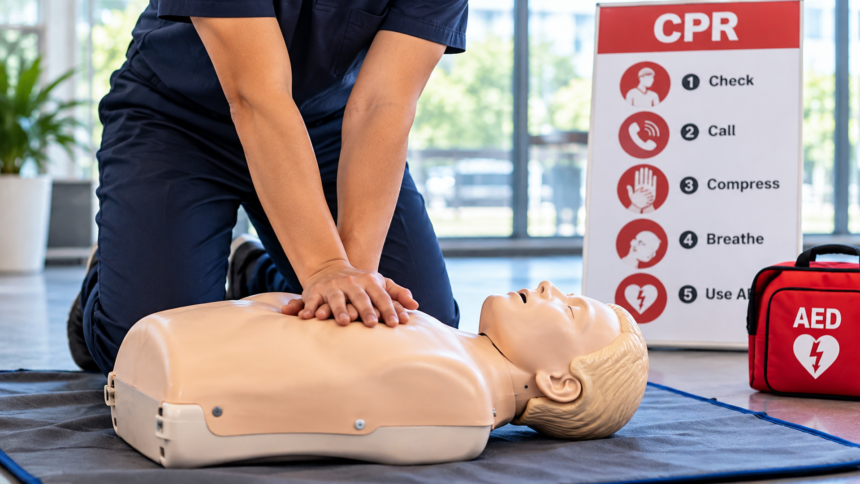
Cardiopulmonary resuscitation (CPR) is an emergency lifesaving technique used when someone becomes unresponsive and is not breathing normally. Knowing the basics can help bystanders respond quickly while waiting for emergency medical assistance.
CPR uses chest compressions to help maintain blood flow to the brain and other vital organs until professional help arrives. Although it cannot guarantee survival, starting CPR promptly during a suspected cardiac arrest can improve the person’s chances of recovery.
What Is CPR and Why Is It Important?
CPR is a basic life-support technique used during cardiac arrest, when the heart stops pumping blood effectively. Chest compressions help circulate blood to essential organs until the heart’s rhythm can potentially be restored or medical professionals take over.
The technique requires the correct hand position, compression depth and speed. Quick action is important because a lack of circulation can cause serious damage to vital organs.
Step-by-Step Guide to Performing CPR
The following steps describe adult CPR for bystanders. Formal first-aid training is recommended.
1. Check responsiveness and breathing
Make sure the surroundings are safe. Tap the person’s shoulders and speak loudly to check whether they respond. Look for normal breathing, but do not delay action if they are only gasping or breathing abnormally.
2. Call for emergency assistance
Ask someone to contact emergency services and bring an automated external defibrillator (AED), if available. In India, call 112 for emergency assistance. Put your phone on speaker so you can follow the dispatcher’s instructions.
3. Position your hands correctly
Lay the person on their back on a firm, flat surface. Place the heel of one hand in the centre of the chest, over the lower half of the breastbone. Put your other hand on top, interlock your fingers and keep your arms straight.
4. Begin chest compressions
Push firmly and quickly, aiming for 100–120 compressions per minute. For an adult, compress the chest approximately 5–6 cm (2–2.4 inches) deep and allow the chest to return fully to its normal position after each compression.
5. Continue CPR and use an AED
If trained and able to provide rescue breaths, give 30 chest compressions followed by two breaths. If you are untrained or unable to give breaths, continuous hands-only CPR is preferable to doing nothing for an adult who has suddenly collapsed.
Turn on an available AED and follow its spoken instructions. Continue CPR until the person shows signs of life and breathes normally, trained responders take over, the scene becomes unsafe, or you are physically unable to continue.
CPR Risks and Important Precautions
CPR can sometimes cause injuries, including fractured ribs, but it is a critical emergency intervention when cardiac arrest is suspected. Do not delay compressions because you are worried about causing an injury.
- Follow the emergency dispatcher’s instructions.
- Avoid unnecessary interruptions to chest compressions.
- Use an AED as soon as one is available.
- Remember that CPR for infants and children differs from adult CPR.