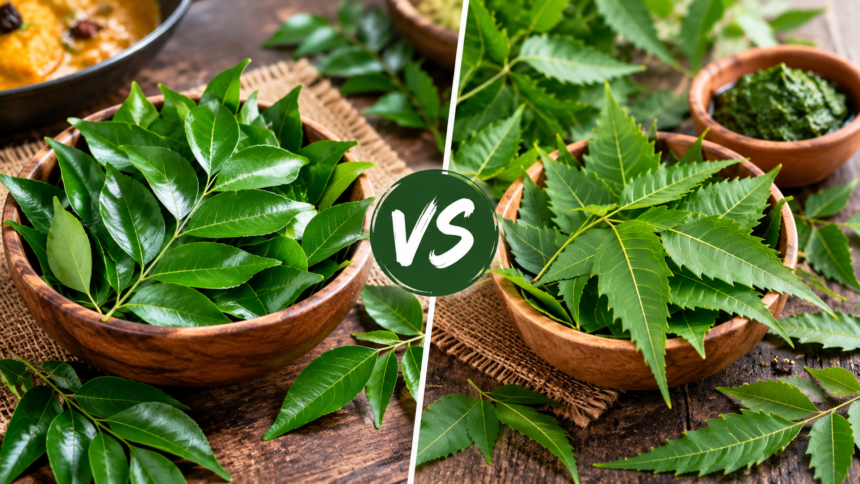
Curry leaves and neem leaves have long been valued in traditional Indian households for their distinctive flavours and potential health benefits. While curry leaves are commonly used in everyday cooking, neem leaves are known for their intensely bitter taste and traditional use in herbal preparations.
Although both plants contain beneficial compounds, they serve different purposes in the kitchen and traditional wellness practices. Understanding their nutritional properties, potential benefits and safety considerations can help you make informed choices about including them in your diet.
Key Nutritional Differences Between Curry Leaves and Neem Leaves
Curry leaves, obtained from Murraya koenigii, are commonly added to dals, chutneys, vegetable dishes and tempering. They contain antioxidants and nutrients, including carotenoids and vitamins, that contribute to a balanced diet.
Neem leaves, from Azadirachta indica, contain various biologically active compounds, including nimbin and azadirachtin. They have a long history of use in traditional practices, although evidence supporting many specific health claims in humans remains limited.
According to consultant dietitian and certified diabetes educator Kanikka Malhotra, curry leaves may support overall nutritional intake, while neem is traditionally associated with antimicrobial and anti-inflammatory properties.
Here is how the two herbs differ:
- Curry leaves: Commonly consumed as part of regular meals, they add flavour and provide beneficial plant compounds and micronutrients.
- Neem leaves: Traditionally used in herbal preparations because of their bitter taste and bioactive compounds, but their safety depends on the form and amount consumed.
Neither herb should be considered a substitute for medical treatment or a proven method of detoxifying the body.
Potential Health Benefits of Curry Leaves and Neem
Curry leaves can be a useful addition to a varied diet because they contain plant compounds with antioxidant properties. They are often included in traditional meals and may contribute to overall nutritional quality. However, claims that they directly control blood sugar, lower cholesterol or promote hair growth should not be treated as guaranteed effects.
Neem leaves contain compounds being studied for their biological activity, including antimicrobial and anti-inflammatory effects. However, many findings come from laboratory or preliminary research, and stronger human studies are needed to establish their effectiveness for specific health conditions.
The important distinction is that curry leaves are a practical everyday culinary ingredient, while consuming neem leaves for health benefits requires greater caution.
How to Include These Herbs in Your Diet Safely
Curry leaves can be incorporated into everyday meals without needing to consume them separately. Try adding fresh leaves to dal, vegetable dishes, chutneys or tempering to enhance flavour.
Neem leaves are much more bitter and should not automatically be treated as a daily dietary supplement. There is no universally established safe daily amount for consuming fresh neem leaves or neem juice, so avoid following fixed-dose home remedies without professional advice.
Keep these precautions in mind:
- Wash fresh leaves thoroughly before use.
- If you have diabetes or take blood-sugar-lowering medication, seek medical advice before using concentrated herbal preparations.
- Avoid neem oil ingestion, as it can cause serious poisoning.
- Consult a healthcare professional before medicinal use of neem, particularly during pregnancy, while breastfeeding or if you have an existing medical condition.
- Do not replace prescribed medicines with herbal remedies.
Curry Leaves vs Neem Leaves: Which One Should You Choose?
For most people looking to add flavour and plant-based nutrients to everyday meals, curry leaves are the more practical choice because they are widely used in cooking. Neem has a place in traditional wellness practices, but its potential benefits and risks require more careful consideration.
Rather than relying on either herb as a detox solution, focus on a balanced diet, adequate hydration, regular physical activity and appropriate medical care.