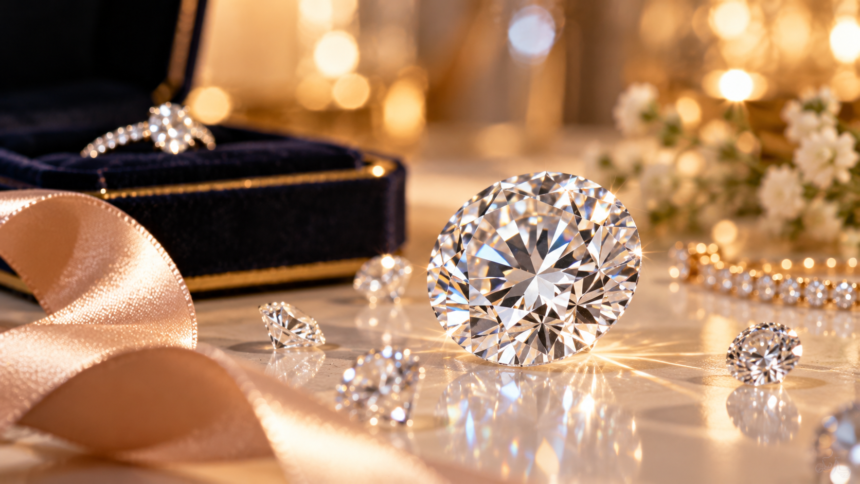
Natural diamonds are valued not only for their sparkle but also for their ancient origins, individual characteristics and the geological history behind their formation. While lab-grown diamonds share the same basic chemical composition as natural diamonds, their formation process and history are different.
The Story Behind Natural Diamonds
Natural diamonds form deep within the Earth under intense pressure and high temperatures over geological timescales. Their colour and internal features can offer clues about the conditions in which they formed.
For example, nitrogen present in a diamond’s crystal structure can contribute to yellow colouring. Researchers can also study nitrogen arrangements and other features to learn more about a stone’s formation and estimate aspects of its geological history.
Natural diamonds may also display distinctive growth patterns and other internal characteristics. Since each stone develops under its own combination of conditions, its individual features can make it distinctive.
How Lab-Grown Diamonds Are Made
Lab-grown diamonds are created using specialised technology that recreates conditions suitable for diamond growth. Two common methods are high-pressure, high-temperature (HPHT) and chemical vapour deposition (CVD).
In the HPHT process, a diamond seed and a carbon source are exposed to high pressure and temperature. With CVD, carbon-containing gases are activated inside a reactor, allowing carbon to deposit onto a diamond seed. Depending on the method and conditions, growth can take days or weeks.
Although lab-grown diamonds are produced much faster than natural diamonds form, they are still diamonds. They have essentially the same chemical composition and crystal structure, and distinguishing them from natural stones generally requires appropriate gemological testing.
Can Experts Tell the Difference?
Yes. Gemologists can examine a diamond’s growth patterns, fluorescence behaviour, inclusions and other characteristics to determine whether it formed naturally or was grown in a laboratory. Specialised testing may be needed because the differences are not always visible to the naked eye.
Both natural and lab-grown diamonds can be beautiful, but their origins, production methods and market considerations differ.
Why Natural Diamonds Hold Emotional Value
Natural diamonds are often associated with commitment, family traditions and heirlooms passed between generations. Their long geological history adds to the appeal for people who value rarity and the connection to the natural world.
Lab-grown diamonds offer another option for buyers who appreciate diamond jewellery but prefer stones created using modern technology. Ultimately, the choice depends on individual priorities, including origin, budget, personal meaning and jewellery preferences.