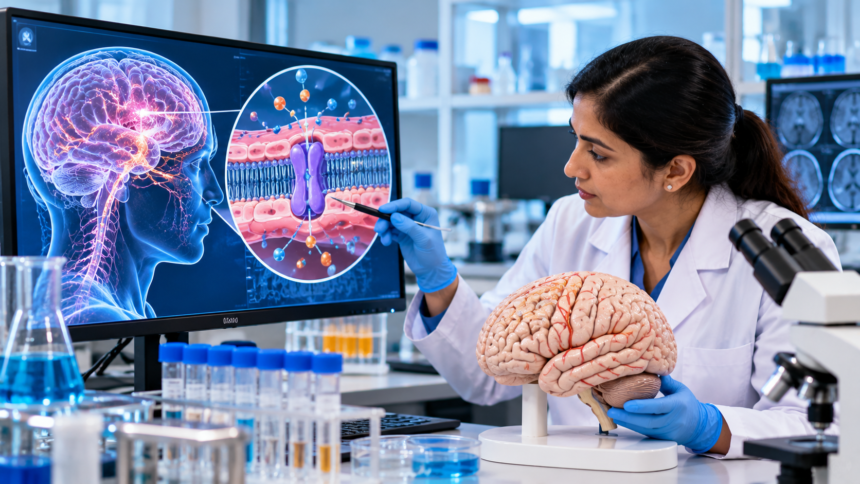
Scientists have identified a potential new way to deliver creatine-related compounds into the brain, a development that could open new research opportunities for neurological disorders. The discovery focuses on a naturally occurring transport protein that may help certain compounds cross the protective barrier surrounding the brain.
The research could provide a new direction for studying conditions in which the brain does not receive enough creatine, a compound important for cellular energy production.
How the Transport Protein Works
The brain is protected by the blood-brain barrier, a specialised system that controls which substances can pass from the bloodstream into brain tissue. Although this barrier protects the brain, it also makes delivering many potential medicines challenging.
Researchers investigated the sodium-dependent multivitamin transporter (SMVT), a protein that normally helps transport certain vitamins and essential nutrients in the body.
Their findings suggest that SMVT can also transport creatine-related compounds, potentially offering an alternative route for improving their delivery to the brain.
Why Creatine Matters for Brain Health
Creatine plays an important role in cellular energy metabolism. A rare condition called creatine transporter deficiency syndrome can interfere with the brain’s ability to obtain sufficient creatine and is associated with serious neurological and developmental difficulties.
The new research suggests that using an alternative transport pathway could help scientists explore new approaches to this condition and other disorders involving the central nervous system.
However, the findings do not mean that a new treatment is ready for patients.
Could This Lead to Future Neurological Treatments?
Researchers believe SMVT may have potential beyond creatine-related compounds. Understanding how the transporter works could help scientists investigate ways to deliver other therapeutic molecules into the brain.
The study provides an early scientific lead rather than proof of an effective treatment. Further studies are needed to establish how well the approach works in living organisms and whether it can eventually be used safely in clinical care.