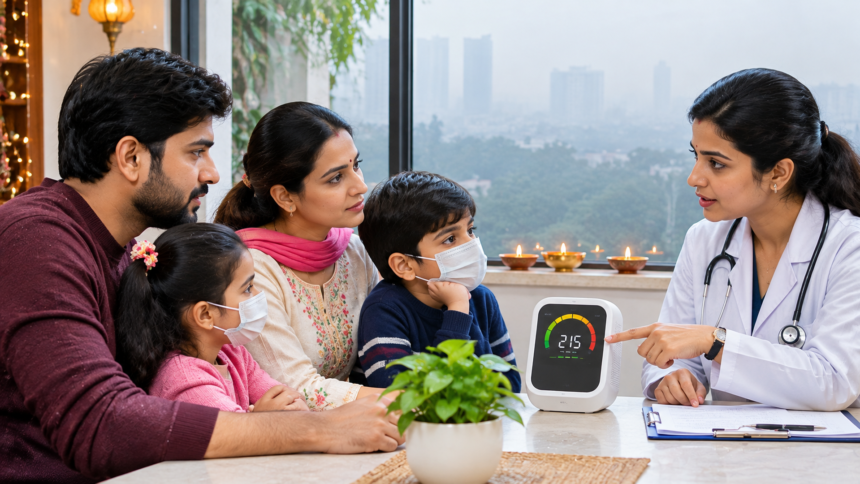
Air pollution is becoming a growing health concern as Diwali celebrations coincide with worsening winter air quality across parts of South Asia. Health experts are warning that smoke from firecrackers, traffic, industrial emissions and other pollution sources can increase respiratory problems and affect cardiovascular health.
The warning is particularly important for children, older adults and people with existing breathing or heart conditions.
Firecrackers Add to Existing Pollution
Winter air pollution is already influenced by vehicle emissions, industrial activity, construction dust and crop and waste burning. Fireworks can add another layer of harmful particles to the atmosphere during festive celebrations.
Fine particulate matter, especially PM2.5, can enter deep into the respiratory system and contribute to breathing difficulties and other health problems.
Experts Recommend Reducing Outdoor Exposure
During periods of heavy pollution, health experts recommend taking precautions such as:
- Checking local air-quality readings before outdoor activities.
- Avoiding strenuous outdoor exercise when pollution levels are high.
- Using a well-fitting N95 or N99 mask outdoors when air quality is poor.
- Keeping indoor spaces free from unnecessary smoke.
- Using a suitable HEPA air purifier where available.
Indoor Air Quality Also Needs Attention
Pollution does not remain limited to outdoor environments. Incense, candles, mosquito coils and cooking smoke can also affect indoor air quality.
Regular damp-mopping and proper ventilation when outdoor air is cleaner can help reduce indoor pollution exposure.
Long-Term Solutions Remain Important
Experts stress that personal precautions alone cannot solve the air pollution problem. Governments and communities need stronger measures to control emissions, improve air quality monitoring and reduce pollution at its sources.
The latest warning highlights the importance of protecting respiratory health during the festive season and throughout the winter months.