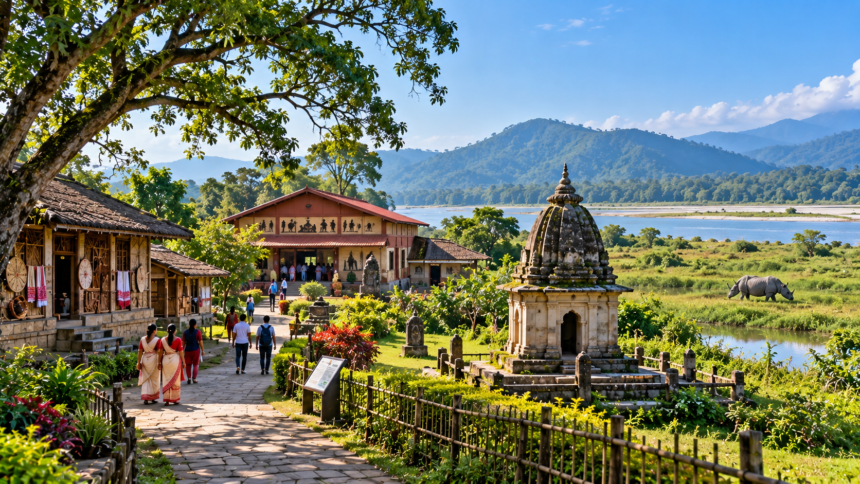
Assam’s historic village of Mayong is attracting renewed attention as it develops a tourism identity that goes beyond its long-standing reputation for folklore and mysterious traditions. Located near the Brahmaputra River, Mayong is increasingly drawing visitors interested in local history, ancient shrines, traditional knowledge and nearby wildlife experiences.
The change offers an opportunity to introduce travellers to a lesser-known part of Assam while supporting local guides, homestays, artisans and other community businesses.
From Folklore to Cultural Heritage
Mayong has been associated for generations with stories of tantra, mantras and supernatural practices. Much of its cultural history survives through oral accounts, local traditions, ancient objects and archaeological discoveries.
The region includes old shrines, religious sculptures and other heritage sites that offer insight into its past. Researchers and local residents are working to document traditional knowledge and preserve stories that might otherwise disappear as younger generations move away from older customs.
For travellers, the village offers an opportunity to learn about Assam’s cultural landscape through local narratives and heritage visits rather than relying only on its popular reputation.
Wildlife Tourism Brings More Visitors
Nearby Pobitora Wildlife Sanctuary, known for its greater one-horned rhinoceroses, is helping introduce more travellers to the area. Visitors who arrive for wildlife safaris may also explore Mayong’s cultural attractions and countryside.
Local tourism observers have reported growing demand for safari vehicles, reflecting increased interest in wildlife experiences. The combination of wildlife, village heritage and river landscapes could give travellers more reasons to spend additional time in the region.
Mayong’s proximity to Guwahati also makes it a potential option for a short excursion for visitors staying in the city.
Plans for a Wider Mayong–Pobitora Travel Circuit
Tourism stakeholders see potential in developing a more organised itinerary connecting wildlife safaris with village walks, local food, heritage sites, birdwatching and responsibly managed river experiences.
A wider circuit could help visitors discover several aspects of the region in one trip. It could also create opportunities for residents to work as guides, host visitors and supply locally made products and food.
However, better visitor facilities, accommodation and reliable travel information will be important if more tourists are to stay overnight instead of returning to Guwahati on the same day.
Protecting Local Culture While Tourism Grows
The growing interest in Mayong also raises questions about how tourism should be managed. Residents have expressed concerns that large commercial developments could overshadow local businesses or turn cultural traditions into sensationalised attractions.
Responsible tourism would require protecting historic shrines, respecting community traditions and ensuring local people share in the economic benefits. Preserving the landscape and surrounding wildlife will also be important as visitor numbers increase.
For travellers seeking a different side of Northeast India, Mayong offers a combination of folklore, cultural heritage and wildlife. Its future as a tourism destination will depend on how successfully the region balances new opportunities with the protection of its distinctive identity.