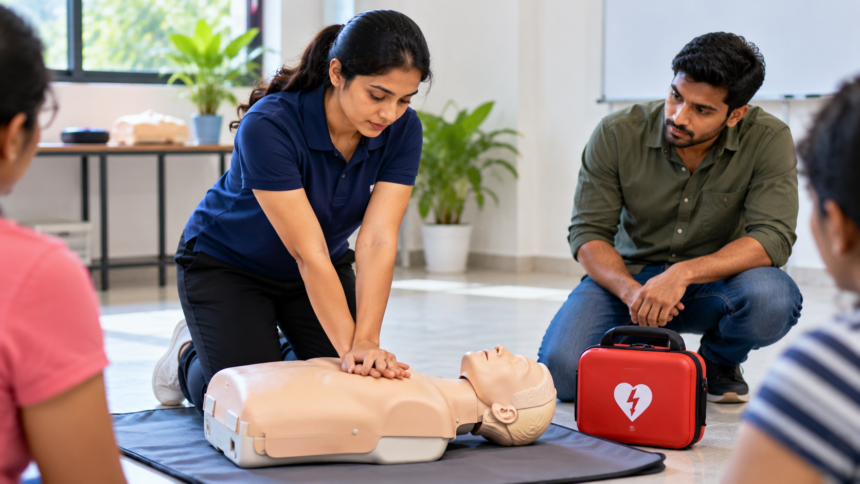
Cardiac arrest can happen suddenly, leaving a person unconscious and unable to breathe normally. Knowing how to recognise the emergency and respond quickly can make a critical difference while medical help is on its way.
Health experts continue to highlight common misconceptions about cardiopulmonary resuscitation (CPR) and automated external defibrillators (AEDs), which can cause people to hesitate when every second matters.
Heart Attack and Cardiac Arrest Are Different
Although the terms are often used interchangeably, a heart attack and cardiac arrest are not the same. A heart attack generally occurs when blood flow to part of the heart muscle is blocked. Cardiac arrest happens when the heart suddenly stops pumping blood effectively.
A heart attack can sometimes trigger cardiac arrest, but the two conditions require different responses. A person who suddenly collapses, becomes unresponsive and is not breathing normally needs immediate emergency assistance.
You Do Not Need to Be a Medical Professional to Help
Another common misconception is that only trained medical professionals can provide CPR or use an AED. Hands-only CPR can be performed by members of the public when an adult suddenly collapses and is unresponsive and not breathing normally.
Call emergency services immediately and follow the dispatcher’s instructions. Begin chest compressions as directed, and ask someone nearby to bring an AED if one is available. These devices provide spoken and visual instructions and analyse the person’s heart rhythm before advising whether a shock is needed.
Why Waiting for an Ambulance Can Be Risky
CPR helps maintain blood circulation to the brain and other vital organs until advanced medical care becomes available. Delaying action can reduce the chances of survival, which is why witnesses should not simply wait for an ambulance if cardiac arrest is suspected.
Concerns about causing injury can also discourage people from helping. Although chest compressions can sometimes cause injuries, emergency guidance prioritises prompt action when a person is unresponsive and not breathing normally. Follow the emergency dispatcher’s instructions rather than allowing fear of making a mistake to prevent assistance.
Awareness and Preparedness Matter
Learning basic CPR and becoming familiar with AEDs can help people respond more confidently in an emergency. Public places such as airports, shopping centres and offices may have AEDs, so knowing where emergency equipment is located can be useful.
The key message is simple: recognise a possible cardiac arrest, call emergency services, start CPR according to dispatcher guidance and use an AED when available. Quick action from someone nearby can help bridge the gap until professional medical care arrives.