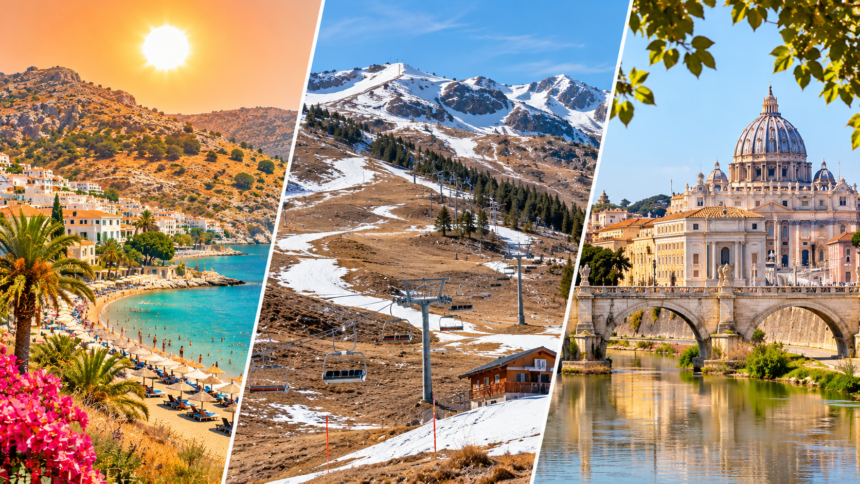
The future of global tourism could look very different by 2050 as rising temperatures and increasingly severe weather conditions threaten popular holiday destinations. New research suggests that nearly two-thirds of tourist destinations worldwide could face growing climate-related challenges under a high-emissions scenario.
The findings raise concerns for countries that depend heavily on beach holidays, mountain tourism, sightseeing and other outdoor travel experiences.
Nearly 62% of Destinations Could Face Climate Pressure
According to the first global findings from Destination Climate RiskScan, approximately 62% of tourism destinations could experience worsening climate hazards and less favourable conditions for tourism activities by 2050 under a high-emissions scenario.
Under a moderate-emissions scenario, the figure is estimated at 36%.
The research examines 2,588 regions across 263 countries and territories, offering a broad picture of how climate change could affect the international tourism industry.
Rising Temperatures Pose a Major Challenge
Extreme heat has been identified as the biggest factor behind increasing climate pressures.
Other concerns include drought and severe weather conditions, which could affect the attractiveness and accessibility of popular holiday locations.
Southern and Eastern Europe are among the regions expected to face particularly strong increases in climate-related pressures.
Beach Holidays and Ski Tourism Could Be Affected
Changing weather patterns could influence when and where people choose to travel.
Beach destinations may experience less comfortable conditions during traditional summer holiday periods, while ski destinations could face difficulties as suitable winter conditions become less reliable.
Sightseeing and other outdoor activities may also be affected by increasing temperatures.
Tourism Industry Faces a Changing Future
The research highlights the importance of preparing tourism infrastructure and businesses for changing climate conditions.
Hotels, travel companies, destination authorities and airlines may need to reconsider seasonal planning and investment decisions as weather patterns evolve.
The findings do not mean that 62% of destinations will become inaccessible. Instead, they indicate that many places could face more difficult conditions for maintaining tourism activities in the coming decades.