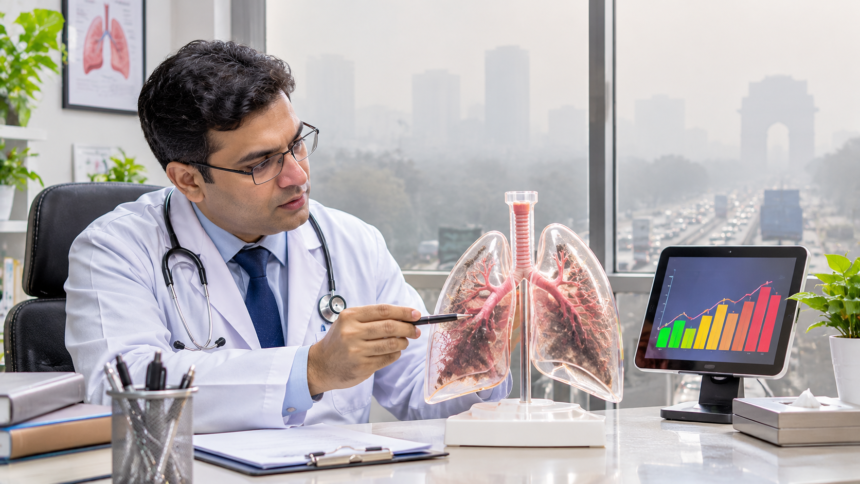
Air pollution in Delhi-NCR is raising fresh concerns about respiratory health, particularly the possibility of lung damage that may develop without obvious warning signs. Health experts are highlighting how prolonged exposure to polluted air can affect lung function even when people do not experience persistent coughing or breathlessness.
The issue has brought attention to the term “Pink Lung”, used in discussions about the appearance of healthy lung tissue and the effects of pollution-related damage.
How Air Pollution Affects Lung Health
Air pollution contains fine particles, including PM2.5, which can travel deep into the respiratory system.
Long-term exposure may contribute to:
- Reduced lung function.
- Airway inflammation.
- Worsening asthma symptoms.
- Increased respiratory health risks.
Children, older adults and people with existing respiratory conditions may be particularly vulnerable.
Why Symptoms May Not Appear Immediately
One major concern is that changes in lung health may develop gradually.
A person may not notice significant symptoms during the early stages of reduced lung function. This is why respiratory health assessments can be important when exposure to air pollution is prolonged.
What Can Help Reduce Exposure?
Public-health experts recommend practical precautions during periods of poor air quality:
- Check local air-quality updates.
- Reduce prolonged outdoor activity when pollution levels are high.
- Keep indoor spaces well ventilated when outdoor air quality permits.
- Follow medical advice if breathing problems develop.
- Use a properly fitted, certified mask when recommended for high-pollution conditions.
Why This Matters for Delhi-NCR
With air pollution remaining a major environmental health concern, understanding its long-term effects is important.
Reducing pollution at its source, improving air-quality monitoring and increasing public awareness are essential steps towards protecting respiratory health.
The latest discussion is a reminder that air pollution is not only an environmental issue but also a significant public-health challenge.