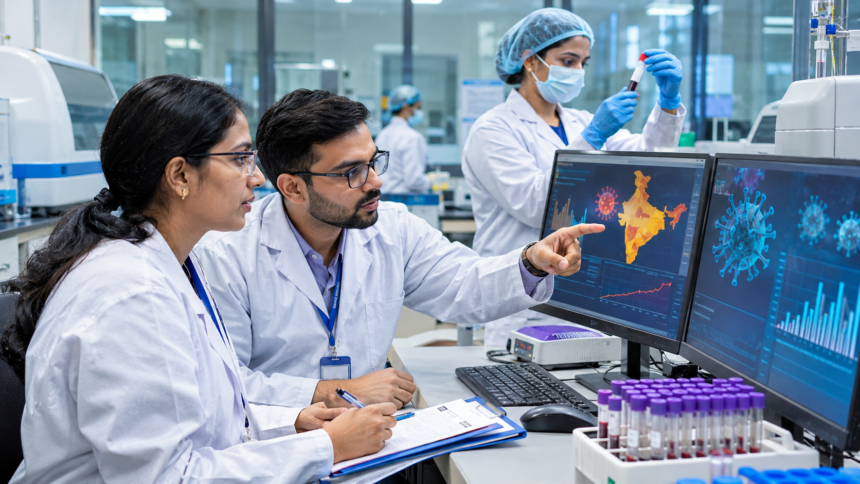
India has introduced a new infectious disease surveillance initiative aimed at identifying potential disease outbreaks at an early stage. The programme will connect 70 specialised laboratories to create a nationwide early-warning network that can help health authorities detect, investigate and respond to infectious diseases more effectively.
The initiative is designed to use real-time or near-real-time health information to identify unusual disease patterns and provide faster feedback for epidemiological investigations.
70 Laboratories to Form a Nationwide Monitoring Network
The surveillance system will operate through 70 Virus Research and Diagnostic Laboratories and Infectious Disease Research and Diagnostic Laboratories across the country.
The network aims to improve coordination between medical laboratories and public health experts. By analysing health data and laboratory findings, authorities will be better equipped to understand the size, spread and speed of a potential outbreak.
Four Major Disease Categories to Be Monitored
The programme has identified priority pathogens associated with four important groups of infectious illnesses:
- Acute febrile illnesses, including fever with rashes
- Acute encephalitis syndrome
- Acute respiratory illnesses
- Acute diarrhoeal diseases
These categories cover several infections that can create significant public health challenges, particularly during seasonal changes and outbreaks.
New Testing Guidelines to Improve Disease Detection
The initiative introduces a graded system for prioritising pathogens. Commonly detected infections that require timely diagnosis will receive higher priority, while less common and rare pathogens will be assessed through specialised testing and surveillance.
The guidelines were developed with inputs from clinicians, laboratory specialists and epidemiologists through 44 expert meetings.
The approach is intended to reduce the chances of missing important infections and improve the quality of diagnostic decisions.
Early Detection Could Strengthen India’s Disease Response
Faster identification of infectious diseases can help health authorities understand emerging threats and take appropriate public health measures.
The initiative is also expected to support the development of affordable diagnostic tools and medical solutions suited to India’s healthcare requirements.
With 70 laboratories connected through a coordinated surveillance approach, the programme represents an important step towards strengthening India’s preparedness against infectious disease outbreaks.