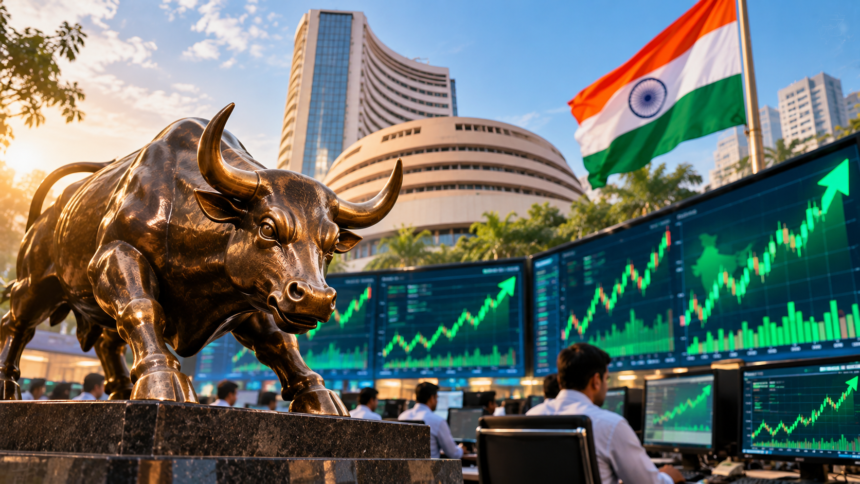
India’s stock market staged a recovery on October 29, with the Sensex and Nifty moving higher during morning trading after a weak previous session. Buying across several sectors helped improve investor sentiment, while global developments remained a key focus for market participants.
Sensex and Nifty Make a Strong Recovery
The BSE Sensex climbed more than 550 points during the morning session, reaching around 73,800. The NSE Nifty 50 also advanced, moving above the 22,800 level. The gains followed Wednesday’s decline, when the Sensex fell 352.64 points to close at 73,246.03 and the Nifty slipped 50.90 points to 22,698.85.
Market conditions remained sensitive to global signals, with investors watching economic developments and changes in crude oil prices.
US Federal Reserve Decision Influences Sentiment
The US Federal Reserve kept its benchmark interest rate unchanged in the 3.75%–4% range. The decision was widely expected, but investors continued to assess the outlook for inflation and the possibility of future policy changes.
Interest-rate decisions in the United States can affect global investment flows and demand for emerging-market assets, including Indian equities.
Banking, IT and Other Stocks Support the Rally
Buying across banking, information technology and fast-moving consumer goods stocks contributed to the recovery during morning trade. Several other sectors also recorded gains, suggesting that the improvement was not limited to a single group of companies.
However, individual shares continued to move in different directions in response to company-specific developments and quarterly results.
What Investors Should Watch Next
Crude oil prices, foreign investor activity, global market trends and corporate earnings are likely to remain important factors for Indian equities. Although the morning rally offered some relief after the previous session’s losses, market movements can change throughout the trading day.
Investors should avoid making decisions based solely on a single session’s gains or losses and consider their own financial goals and risk tolerance.