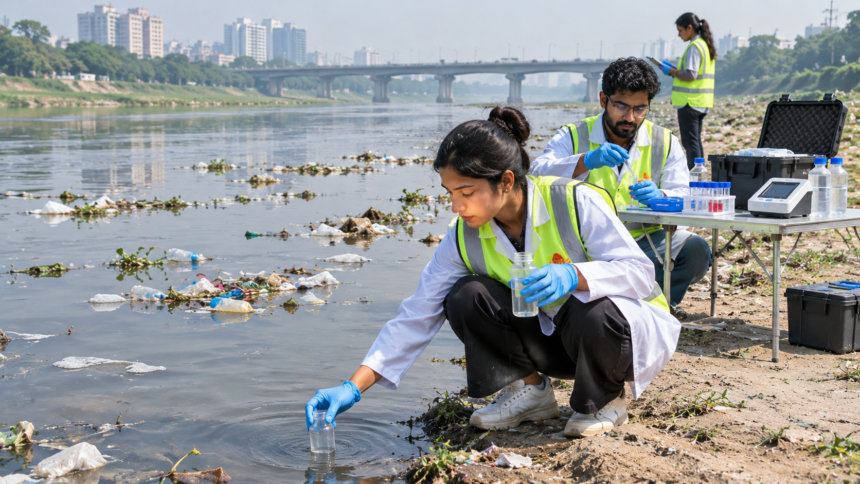
A new scientific study has raised concerns about pollution in the Yamuna River after researchers detected microplastics along with a mixture of pharmaceutical residues, pesticides and industrial pollutants in its water and surrounding environment.
The research, examined eight locations across a 48.8-kilometre stretch of the Yamuna, from Palla to Asgarpur Jagir. The findings highlight the growing complexity of water pollution and the need for stronger monitoring of contaminants that may affect environmental and public health.
Multiple Pollutants Detected in River Samples
Researchers identified microplastics alongside chemical contaminants, including residues from medicines, agricultural pesticides and industrial activities.
Microplastics are extremely small plastic particles that enter the environment through the breakdown of larger plastic products, synthetic materials and other sources.
The presence of several different pollutants together suggests that the river is receiving contamination from multiple sources rather than a single type of waste.
Why Microplastic Pollution Is a Health Concern
Microplastics have become an important subject of scientific research because they can enter the environment and move through food chains.
Scientists are investigating how exposure to these particles may affect human health. However, the exact health risks associated with different levels of microplastic exposure are still being studied, and their detection in river water does not automatically establish a specific health outcome.
Pharmaceutical and Industrial Waste Add to the Problem
The detection of pharmaceutical residues and industrial chemicals highlights another challenge for water-quality management.
Some chemical contaminants can remain in the environment even after conventional wastewater treatment. Agricultural runoff can also carry pesticides into rivers, adding to the existing pollution burden.
Need for Stronger Water Monitoring
The findings underline the importance of improving wastewater treatment, controlling industrial discharge and reducing plastic waste entering rivers.
Regular monitoring of water bodies is also necessary to identify emerging contaminants and understand how pollution levels change over time.
The study adds to growing scientific concerns about the condition of urban rivers in India and highlights why protecting water resources requires attention to both visible waste and microscopic pollutants.