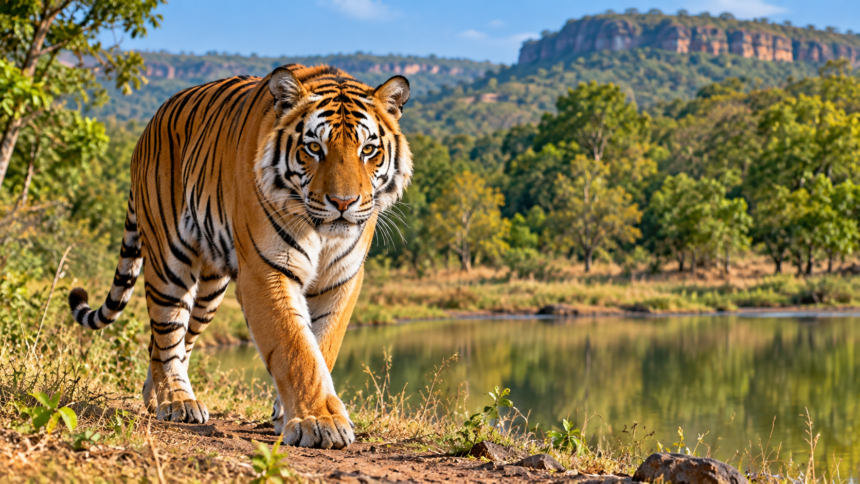
Nagpur, located in Maharashtra’s Vidarbha region, is widely known as the Tiger Capital of India because of its proximity to several important tiger reserves and wildlife sanctuaries. With good air and rail connectivity, the city serves as a convenient starting point for travellers hoping to explore central India’s forests and spot wildlife in its natural habitat.
From the famous Tadoba-Andhari Tiger Reserve to the forests of Pench, the region offers opportunities to experience India’s rich biodiversity. Visitors may encounter tigers, leopards, deer, gaur and numerous bird species, although wildlife sightings are never guaranteed.
Why Is Nagpur Called the Tiger Capital of India?
Nagpur’s location makes it an important access point for several protected forest areas in Maharashtra and neighbouring regions. Travellers can use the city as a base for planning wildlife excursions without needing to travel directly to remote forest locations.
Three popular destinations near Nagpur are Pench Tiger Reserve, Umred-Karhandla Wildlife Sanctuary and Tadoba-Andhari Tiger Reserve. Each offers a different landscape and safari experience, making the region appealing to nature lovers, photographers and wildlife enthusiasts.
5 Places to Visit in and Around Nagpur
1. Pench Tiger Reserve
Pench is known for its forests, diverse wildlife and association with the landscape that inspired Rudyard Kipling’s The Jungle Book. Jeep safaris allow visitors to explore designated areas of the reserve with trained guides.
2. Umred-Karhandla Wildlife Sanctuary
Located around 60 kilometres from Nagpur, Umred-Karhandla is another option for wildlife enthusiasts. The sanctuary supports tigers, gaur, wild dogs and other species in a forest environment.
3. Tadoba-Andhari Tiger Reserve
Tadoba is one of Maharashtra’s best-known tiger safari destinations. Because the reserve has multiple entry gates, visitors should check their selected safari zone before booking accommodation and transport.
4. Deekshabhoomi
Back in Nagpur, Deekshabhoomi is an important Buddhist monument associated with Dr B. R. Ambedkar’s conversion to Buddhism in 1956. It offers visitors an opportunity to explore a significant part of the city’s cultural and historical heritage.
5. Zero Mile Stone
The Zero Mile Stone is a recognised landmark associated with Nagpur’s central geographical position in India. It makes a convenient stop for travellers exploring the city.
Best Time to Visit Nagpur for a Tiger Safari
February to May is often considered a favourable period for tiger sightings because animals may gather around available water sources as temperatures rise. However, this period can be very hot, and sightings remain unpredictable.
Safari availability, opening periods and timings differ between reserves. Check official booking portals and local weather conditions before finalising your itinerary.
How to Reach Nagpur
By air: Dr Babasaheb Ambedkar International Airport connects Nagpur with several Indian cities.
By train: Nagpur is an important railway junction with rail connections to many parts of India.
By road: The city is connected to surrounding towns and wildlife destinations by road. Travel times depend on the reserve, entry gate and traffic conditions.
Travel Tips for a Wildlife Holiday
- Book safaris through authorised booking channels and reserve early during busy periods.
- Choose accommodation according to your selected safari gate.
- Carry sun protection, comfortable clothing and sufficient drinking water.
- Follow your guide’s instructions and maintain a safe distance from wildlife.
- Keep your itinerary flexible because weather and forest conditions can affect safari operations.
Nagpur combines convenient transport links with access to some of central India’s best-known wildlife destinations. Whether you are hoping to see a tiger, explore forest landscapes or discover the city’s cultural landmarks, it can be a useful starting point for a wildlife-focused trip.