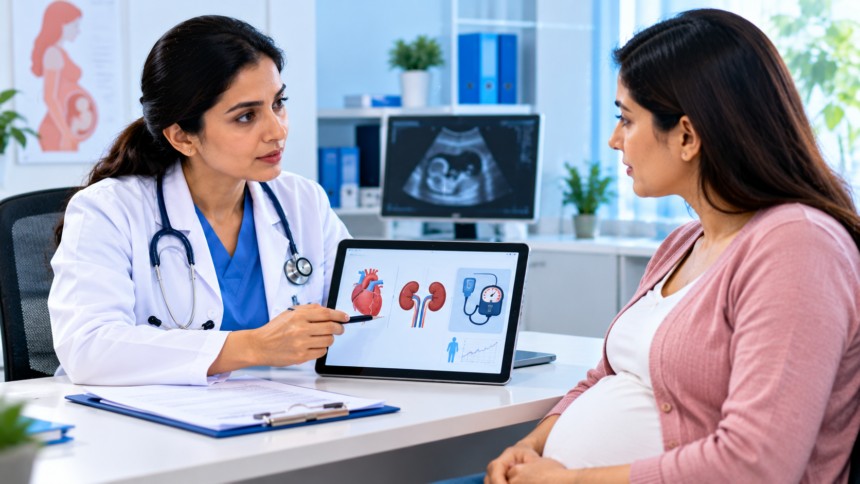
Pregnancy-related health complications may provide important clues about a woman’s long-term health, according to new research involving more than 1.4 million women in England. Scientists have found that complications such as high blood pressure, pre-eclampsia and gestational diabetes are associated with an increased risk of developing heart, kidney and metabolic conditions later in life.
The findings highlight why pregnancy health records should remain an important part of women’s medical history, even years after childbirth.
Study Analyses Health Records of 1.4 Million Women
Researchers examined medical records of more than 1.4 million women who experienced pregnancy between 2000 and 2022. Their analysis covered 10 pregnancy complications and four major long-term health conditions: cardiovascular disease, type 2 diabetes, high blood pressure and chronic kidney disease.
Participants were followed for an average of four years to understand how pregnancy-related complications were associated with their later health.
Gestational Diabetes and High Blood Pressure Show Strong Links
One of the most significant findings involved gestational diabetes. Women who experienced this condition during pregnancy had approximately seven times the rate of developing type 2 diabetes compared with women without the complication.
The study also found that gestational hypertension and pre-eclampsia were associated with more than three times the rate of later high blood pressure. These conditions were also linked to approximately twice the rate of chronic kidney disease.
The researchers identified increased rates of cardiovascular disease and other metabolic conditions among women with these pregnancy complications.
Postnatal Depression Also Emerges as an Important Health Indicator
Another notable finding concerned postnatal depression. Women who experienced depression following their most recent pregnancy had a 35% to 56% higher rate of the four health conditions examined in the study.
The association was particularly noticeable for cardiovascular disease, where the rate was more than 50% higher.
Researchers also identified links between future health risks and complications such as premature birth, miscarriage, stillbirth and placental abruption.
Why Pregnancy History Matters After Childbirth
The findings suggest that medical care should not focus only on complications during pregnancy and the immediate recovery period. A woman’s complete pregnancy history may also help healthcare professionals understand her future health risks.
The researchers recommend that women share details of previous pregnancy complications with their doctors and continue appropriate health checks after childbirth. Monitoring blood pressure, blood glucose and kidney health may help identify potential problems earlier.
However, the study was observational, meaning it cannot establish that pregnancy complications directly cause these diseases. Having experienced a pregnancy complication does not mean a woman will necessarily develop a long-term health condition.
The research highlights the importance of treating pregnancy history as valuable health information that can support better preventive care throughout a woman’s life.