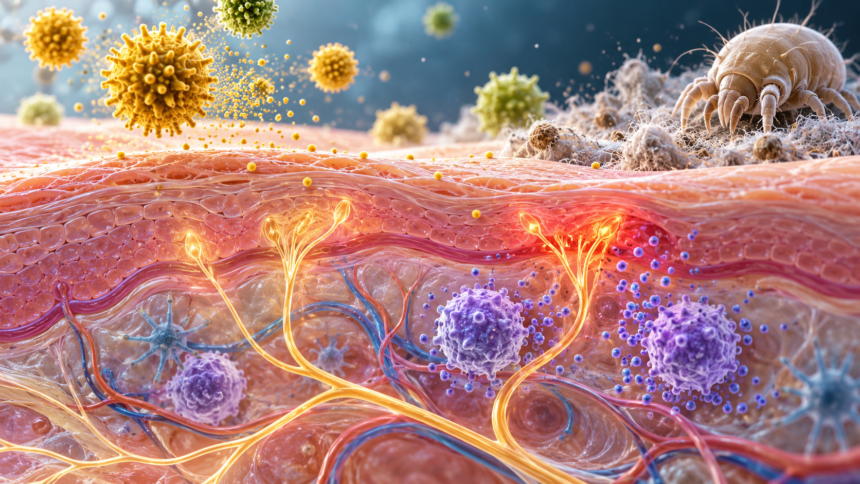
Researchers have identified a possible explanation for why allergic reactions can become stronger over time. New findings suggest that sensory nerve cells may play an important role in how the body responds to allergens, potentially opening new avenues for future allergy treatments.
How Sensory Nerves May Influence Allergies
Sensory neurons help the body detect sensations such as touch and itching. These nerve cells may also respond directly to allergens and communicate with the immune system.
Research examined how repeated exposure to allergens could change the way sensory neurons respond. The findings suggest that these cells may become more sensitive, potentially making subsequent allergic reactions more intense.
What the Experiments Revealed
In experiments involving mice, researchers studied reactions to substances including dust mite allergens and papain, a compound derived from papaya.
The exposure appeared to affect the mitochondria inside sensory neurons, leaving the cells more responsive to later encounters. The animals subsequently experienced stronger immune responses and increased itching.
Researchers also observed that this heightened response could extend to different allergens, including mold-related triggers. The findings may help explain how exposure to one allergen could influence reactions to other substances. However, further research is needed to establish whether the same mechanism operates in humans.
Could This Lead to New Allergy Treatments?
These findings offer a potential new direction for understanding allergic reactions. Researchers are investigating the biological mechanisms behind this increased nerve sensitivity and the proteins involved in the process.
However, the experiments focused on mice and specifically examined skin inflammation and itching. The findings do not establish a new treatment for people with allergies.
Further studies will be needed to determine whether targeting these biological pathways can safely help prevent or reduce allergic reactions in humans.