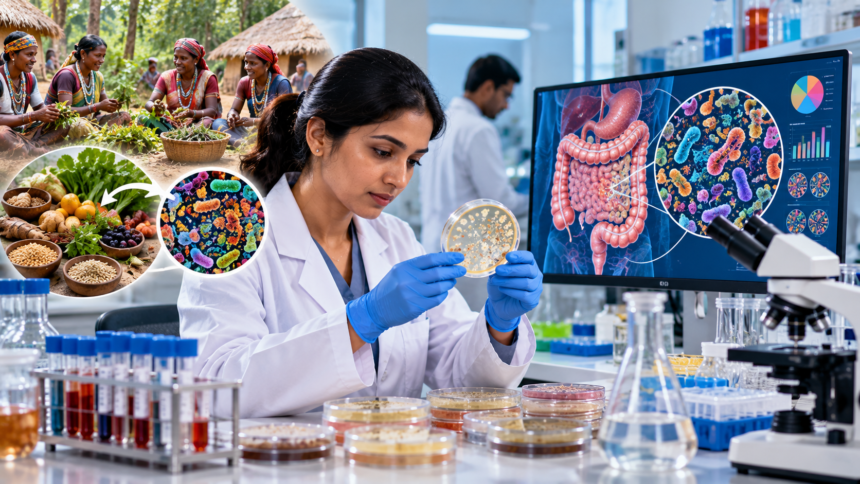
Scientists in India have uncovered previously unknown bacterial diversity in the gut microbiomes of tribal communities, opening new avenues for research into digestive health, nutrition and the relationship between people and their environments.
The study identified 14 previously unknown bacterial species and nearly 200 undocumented microbial strains. The findings highlight how much remains to be understood about the microorganisms living in the human intestine and how their composition may vary across different populations.
What the Researchers Discovered
The research was conducted by scientists at the BRIC–National Centre for Cell Science in Pune. Their investigation examined gut microbiomes among India’s tribal communities and documented microbial diversity that had not previously been described.
The gut microbiome consists of bacteria and other microorganisms that live in the digestive system. These organisms contribute to several processes, including digestion, nutrient metabolism and interactions with the immune system.
Discovering new bacterial species does not automatically mean they are beneficial or harmful. Further investigation is needed to establish their biological functions and understand how they interact with the human body.
Diet and Geography May Shape Gut Health
The findings highlight the importance of studying gut microbiomes in different communities. Food habits, local environments and other lifestyle factors can influence the types of microorganisms found in the digestive system.
Researchers have increasingly recognised that microbiome findings from one population may not fully represent the microbial diversity of another. Studying India’s diverse communities could therefore help build a more comprehensive understanding of gut health.
The research also raises questions about how well existing microbiome reference databases represent populations whose diets and environments differ from those studied more extensively.
Why This Discovery Matters for Future Research
A better understanding of microbial diversity could support future investigations into nutrition, digestive health and the relationship between the microbiome and disease.
The findings may also help researchers evaluate whether probiotics and other microbiome-related approaches developed using data from different populations are appropriate for people with different microbial profiles.
However, the discovery alone does not establish that specific bacteria can prevent or treat any illness. Their functions and possible health applications will require further scientific study.
Building a More Complete Picture of India’s Gut Microbiome
India’s varied diets, environments and cultural practices offer important opportunities for microbiome research. Documenting microbial diversity across different populations may help scientists develop reference data that better reflects the country’s population.
The study represents a step towards that broader goal. Further research will be needed to understand the newly identified organisms, determine their roles and assess whether the findings have practical applications for healthcare and nutrition.