Some people continue to experience changes in their sense of taste long after recovering from COVID-19. Researchers are investigating biological changes in taste-related cells to understand why normal taste perception does not always return quickly in some individuals.
What Researchers Are Investigating
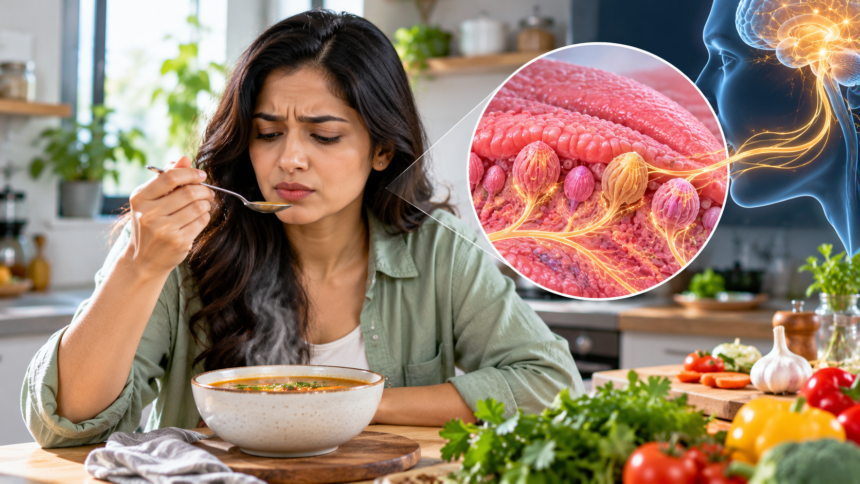
Taste depends on specialised cells that detect flavours and send signals to the nervous system. When these cells or the processes involved in taste perception are disrupted, food may taste weaker, different or less enjoyable than before.
Researchers are examining taste-bud samples from people who continue to experience taste problems more than a year after their initial infection. The aim is to identify molecular changes that could help explain why these symptoms persist.
How Persistent Taste Changes Affect Daily Life
Long-lasting changes in taste can make everyday meals less enjoyable and may affect appetite. Some people find that familiar foods taste different or that certain flavours are harder to recognise.
Taste problems can also occur alongside changes in the sense of smell, which contributes significantly to the overall experience of eating. As a result, people may find it difficult to enjoy food as they did before their illness.
Could This Research Lead to Better Treatments?
Understanding the biological mechanisms behind persistent taste problems could help researchers develop more targeted approaches to diagnosis and treatment.
However, the research is still ongoing. The findings do not establish a single cause for every case of prolonged taste loss, and they do not confirm that a new treatment is available.
Anyone experiencing persistent changes in taste should consult a qualified healthcare professional, particularly if the symptoms affect appetite, eating habits or nutritional health.