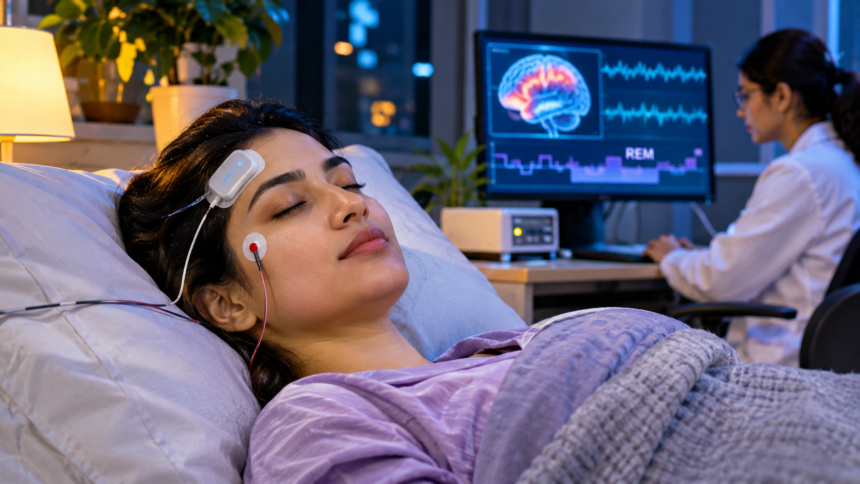
Scientists at the University of Texas at Austin have developed an innovative wearable device that could open new possibilities in sleep research. The soft, skin-attached patch, called NEUSLeeP, uses ultrasound technology to stimulate specific regions deep inside the brain while simultaneously monitoring brain activity.
The research suggests that the technology may help people enter Rapid Eye Movement (REM) sleep sooner and spend more time in this important sleep stage.
Unlike conventional approaches that rely on medication, the experimental device works through non-invasive stimulation without requiring surgery.
How Does the New Sleep Patch Work?
The NEUSLeeP device combines two technologies: ultrasound stimulation and electrodes that monitor electrical activity in the brain.
Once attached to the skin, the patch sends carefully controlled ultrasound signals towards brain regions involved in regulating sleep. At the same time, its monitoring system records how the brain responds.
This combination allows researchers to study and influence sleep-related brain activity without an invasive medical procedure.
REM sleep is an important stage of the sleep cycle during which most vivid dreaming occurs. It is also associated with memory consolidation, emotional processing and the body’s ability to adapt to stress.
Study Reports Faster Entry Into REM Sleep
The research team tested the device in a study involving 28 participants, including healthy sleepers and people experiencing certain sleep difficulties.
The results showed that participants using the patch entered REM sleep an average of 43 minutes sooner. They also spent approximately 16 additional minutes in REM sleep.
Participants reported that the device was comfortable to wear, with minimal adverse effects during the study.
Although the initial results are encouraging, the relatively small number of participants means that larger clinical trials will be necessary before researchers can establish how consistently the technology works.
Possible Connection With Stress and Emotional Health
Researchers also examined whether changes in REM sleep could influence other aspects of health.
Among healthy participants, ultrasound stimulation was associated with improvements in heart rate variability, a measurement used to understand how the nervous system responds to stress and changes in activity.
Brain imaging also revealed changes in neural circuits involved in emotional processing.
These findings have attracted scientific interest because REM sleep is associated with emotional regulation and memory-related processes.
However, researchers have not yet established whether the device can improve symptoms of depression, anxiety or other mental health conditions.
Could This Technology Change Future Sleep Treatments?
Many existing approaches to sleep problems involve behavioural therapy, medical assessment and, in some cases, medication.
The new patch represents a different research direction because it attempts to influence specific brain regions involved in sleep regulation.
Scientists believe that further development could eventually lead to personalised sleep-monitoring systems and new non-invasive approaches for people experiencing certain sleep disorders.
The research team is planning larger clinical trials to investigate its potential applications in chronic insomnia and other conditions.
What Happens Next?
Despite the promising findings, NEUSLeeP remains an experimental technology rather than an established sleep treatment. Its long-term safety, effectiveness and suitability for different groups of people still need to be investigated.
The study nevertheless represents an important development in biomedical engineering and sleep science. If future trials confirm the early results, wearable ultrasound technology could provide researchers with a new way to understand and potentially improve human sleep.