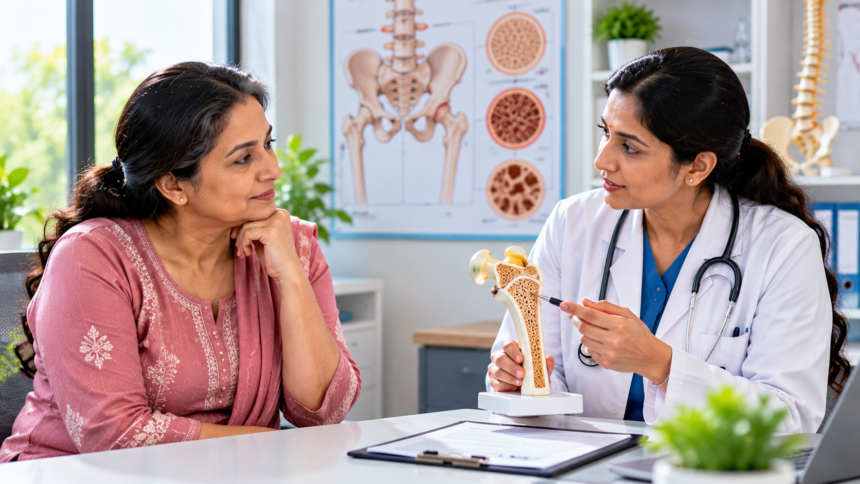
Bone health is an important part of healthy ageing, yet conditions that weaken bones can develop without obvious warning signs. Osteoporosis is one such condition. It reduces bone strength and increases the risk of fractures, sometimes after a minor fall or everyday movement.
Because the condition may remain unnoticed until a fracture occurs, understanding the risk factors and knowing when to seek medical advice can help people make informed decisions about their health.
What Is Osteoporosis?
Osteoporosis develops when bones lose density and strength, making them more vulnerable to breaking. The condition becomes more common with age and is particularly relevant for women after menopause, although men and younger people can also be affected.
A person may not experience pain or other clear symptoms during the early stages. This is why doctors may recommend an assessment for people whose age, medical history or other risk factors suggest a higher likelihood of developing the condition.
Who May Need a Bone Health Assessment?
Ageing, menopause, a family history of osteoporosis, previous fractures and certain medical conditions can increase the risk of weakened bones. Some medicines may also affect bone health when used over long periods.
A healthcare professional can assess these factors and decide whether testing is appropriate. A bone density scan, commonly called a DXA or DEXA scan, is one of the tests used to evaluate bone mineral density.
Not everyone needs screening at the same age or at the same frequency. Recommendations depend on individual circumstances and established medical guidance.
Everyday Habits That Support Strong Bones
A balanced diet containing adequate calcium and vitamin D helps support normal bone health. Dairy products, calcium-fortified foods and certain green vegetables can contribute calcium, while vitamin D supports calcium absorption.
Regular weight-bearing activity, such as walking, and appropriate strength exercises can also help maintain bone strength and muscle function. Avoiding smoking and limiting alcohol consumption are additional steps that may support long-term bone health.
People with existing medical conditions or a high risk of fractures should discuss suitable exercise and nutritional needs with a healthcare professional.
Why Early Detection Matters
Identifying osteoporosis can help healthcare professionals recommend appropriate treatment and steps to reduce fracture risk. Depending on the individual’s condition, management may include lifestyle changes, measures to prevent falls and prescribed medication.
Persistent bone pain, a fracture following a minor injury or a noticeable loss of height should be discussed with a healthcare professional.
Protecting bone health involves more than taking supplements. Awareness of personal risk factors, appropriate testing and consistent healthy habits can all contribute to maintaining mobility and independence as people grow older.