

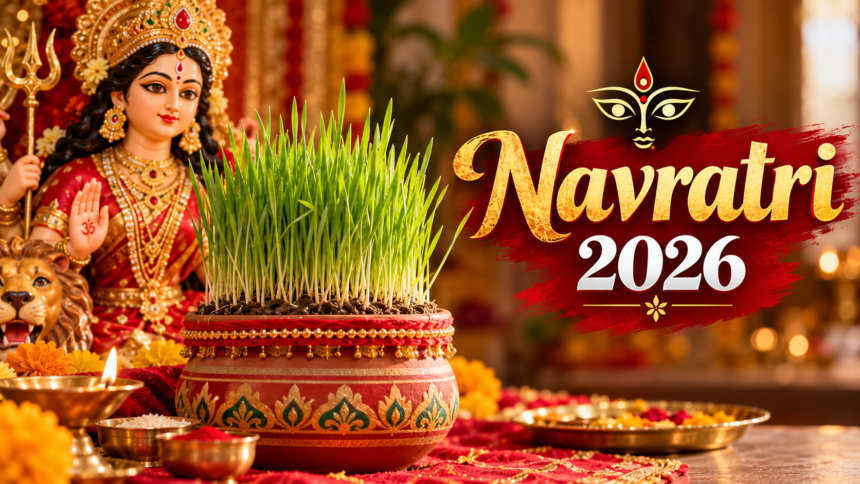
New Delhi: Navratri is a major Hindu festival celebrated with devotion and enthusiasm across India and in Hindu communities worldwide. The festival commemorates Goddess Durga’s battle against the demon Mahishasura, who had received a boon from Lord Brahma that made him invulnerable to defeat by anyone except a woman. The nine-day celebration represents the triumph of good over evil, with devotees worshipping the nine forms of Maa Durga throughout the festival.
One of the traditional rituals performed during Navratri is sowing barley seeds, known as jau, on the first day. Devotees prepare a small bed of soil in their home temple, sow the seeds after performing the puja and water them daily. On the tenth day, the grown shoots are removed after prayers and distributed among devotees as a symbol of Maa Durga’s blessings.
Significance of Sowing Barley During Navratri
According to Hindu beliefs, barley was the first crop to grow on Earth when Lord Brahma created the universe. Chaitra Shukla Pratipada, the first day of the bright lunar fortnight in the month of Chaitra, is traditionally associated with the creation of the universe. This belief is one reason why barley is sown at the beginning of Navratri.
The ritual is also associated with the concept of Anna Brahma, which emphasises the importance of food and teaches people to respect it.
Another traditional belief connects Navratri with the story of Lord Ram. According to the Ramayana, Lord Ram worshipped the nine forms of Maa Durga to seek strength before fighting Ravana, who had abducted Goddess Sita. He ultimately defeated Ravana on Vijayadashami, the tenth day associated with the victory of good over evil.
What Does the Growth of Barley Symbolise?
Traditional beliefs attach different meanings to the growth and appearance of barley shoots during Navratri.
If the barley grows thickly and develops a white colour, it is considered an auspicious sign associated with prosperity, satisfaction and success. Devotees regard healthy growth as a symbol of Maa Durga’s blessings.
In contrast, black-coloured barley is traditionally considered inauspicious and is sometimes associated with negative energy. These interpretations are based on religious customs and beliefs rather than scientifically established predictions.
After the nine-day festival concludes, the barley shoots are traditionally immersed in a river or another clean water body as part of the ritual.
Scientific Importance of Barley Shoots
Barley shoots contain several nutrients, including vitamins A, C, K and B-complex vitamins, along with protein and amino acids. They also contain chlorophyll, a natural green pigment found in plants.
Barley shoots are valued for their nutritional content, but claims that they can cure most blood-related conditions or remove heavy metals from the human body should not be treated as established medical facts. Their health benefits depend on their composition, preparation and consumption, and they should not replace appropriate medical treatment.
Navratri 2026: Follow the Traditional Ritual with Devotion
Navratri provides devotees with an opportunity to worship Maa Durga and seek her blessings. Sowing barley at home remains an important tradition for many families, symbolising faith, prosperity and respect for food.
During Navratri 2026, devotees who observe this custom can perform the ritual with devotion and follow their family traditions throughout the nine-day celebration.
Disclaimer: This article describes religious traditions, cultural beliefs and general nutritional information. Interpretations of barley growth as a sign of good or bad fortune are based on traditional beliefs and are not scientifically proven. The nutritional information provided should not be considered medical advice or a substitute for professional healthcare.