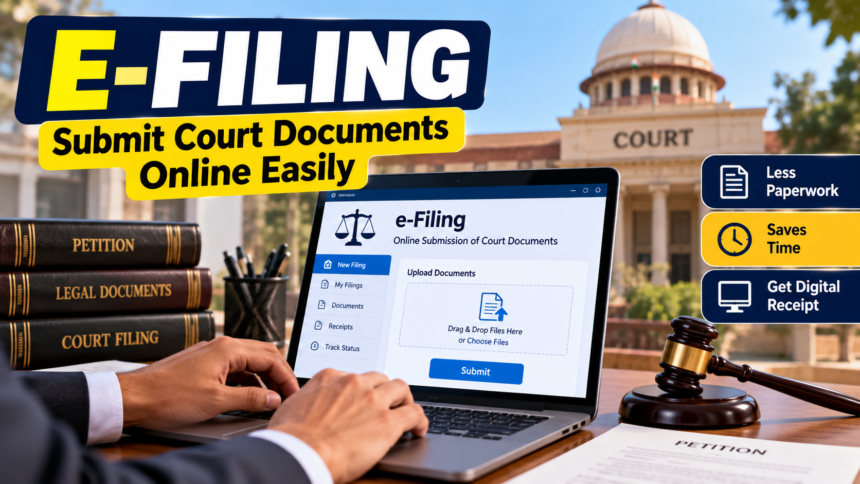
Electronic filing, commonly known as e-filing, has made it easier for people to submit petitions and legal documents without visiting court premises in person. Through designated online platforms, litigants, lawyers and other users can complete filing procedures from their homes or offices, reducing the need for physical paperwork and repeated visits to court offices.
The digital system is designed to make document submission more convenient while saving time and effort. It also provides electronic acknowledgements after successful submissions, helping users maintain records and confirm that their documents have been received.
How Does the Court E-Filing System Work?
The e-filing facility allows users to submit petitions and other required legal documents through an authorised digital platform. Instead of carrying physical files to court offices and waiting in queues, applicants can upload the necessary documents online by following the prescribed procedure.
After a successful submission, users may receive a digital receipt or acknowledgement as confirmation. These electronic records can help them organise their documents and refer to filing details when required.
The exact process and available services may vary depending on the court and the online platform being used.
Key Benefits of Online Legal Filing
One of the main advantages of e-filing is the reduction in paperwork and the time spent completing filing formalities. Users can submit documents remotely, which may also reduce travel expenses and the inconvenience associated with visiting court premises.
Digital submission can help streamline administrative work by reducing dependence on manual document handling. Electronic acknowledgements also provide a convenient way to maintain filing records and verify submission details.
For lawyers and litigants handling multiple cases, having digital records can make document management more organised and accessible.
How E-Filing Can Improve Access to Justice
Online filing facilities can be particularly useful for people who live far from court offices or face difficulties travelling to complete legal formalities. By enabling remote submission, these platforms can make certain court services more accessible to people in different locations.
The system can also help reduce delays associated with physical document submission and manual administrative procedures. However, users must still follow the relevant court’s filing rules, documentation requirements and deadlines.
E-filing does not eliminate every step of the legal process, but it can simplify document submission and improve convenience for eligible users.
A Step Towards Digital Court Services
The adoption of electronic filing is part of the broader use of technology to modernise court administration. By supporting online document submission, digital acknowledgements and organised records, e-filing can help make administrative procedures more efficient and transparent.
As digital court services develop, these facilities can provide litigants, lawyers and other users with a more convenient way to complete filing formalities while reducing unnecessary physical visits.
Disclaimer: This article is intended for general informational purposes only and does not constitute legal advice. E-filing procedures, eligibility requirements, document formats and submission deadlines may differ across courts and jurisdictions. Users should consult the relevant court’s official website or seek guidance from a qualified legal professional to confirm the applicable process before submitting documents.