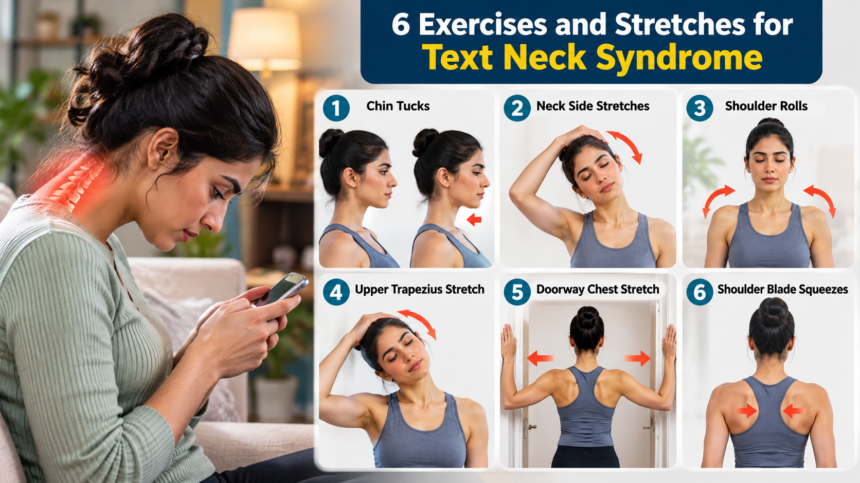
Spending long hours looking down at a mobile phone, laptop or tablet can put extra strain on the neck and shoulders. This problem, commonly known as text neck syndrome, can lead to muscle stiffness, shoulder discomfort and headaches when the same posture is maintained for extended periods.
Repeatedly bending the head forward places additional stress on the muscles, ligaments and joints that support the neck. Poor sitting posture and limited movement throughout the day can make the discomfort worse.
Fortunately, gentle stretches and strengthening exercises may help reduce muscle tension, improve flexibility and support better posture. Along with regular movement breaks and a comfortable screen position, these exercises can help make everyday device use more comfortable.
1. Chin Tucks
Chin tucks help strengthen the deep neck muscles and improve forward head posture, which can develop when people frequently look down at their screens.
To perform this exercise, sit or stand upright and look straight ahead. Gently move your chin backwards without tilting your head up or down. Hold the position for five seconds before relaxing.
Repeat the movement 8–10 times, keeping it slow and comfortable.
2. Neck Side Stretches
Neck side stretches can help ease tightness along the sides of the neck after long periods of sitting or using a phone.
Sit comfortably with your shoulders relaxed. Slowly tilt your right ear towards your right shoulder without lifting the shoulder. Hold for 15–20 seconds, then return to the starting position.
Repeat on the left side. Perform two or three repetitions on each side without pulling or forcing your head.
3. Shoulder Rolls
Shoulder rolls help loosen the muscles around the shoulders and upper back, which may become tense during prolonged screen use.
Stand or sit upright with your arms relaxed by your sides. Slowly raise your shoulders towards your ears, roll them backwards and lower them. Repeat 10 times.
Next, roll your shoulders forwards another 10 times. Keep the movement smooth and avoid shrugging forcefully.
4. Upper Trapezius Stretch
The upper trapezius muscles extend from the neck towards the shoulders. Maintaining the same posture for long periods may contribute to tightness and discomfort in this area.
Sit upright with your shoulders relaxed. Gently tilt your head towards your left shoulder until you feel a mild stretch on the right side of your neck. You can hold the edge of your chair with your right hand to keep that shoulder relaxed.
Hold for 15–20 seconds, then return to the starting position and repeat on the opposite side. Avoid pulling your head down with your hand.
5. Doorway Chest Stretch
Prolonged screen use can encourage rounded shoulders and tight chest muscles. A doorway chest stretch may help improve chest flexibility and make it easier to maintain a comfortable upper-body posture.
Stand in a doorway and place your forearms against the doorframe, with your elbows bent at approximately 90 degrees. Step one foot forward and gently lean forwards until you feel a mild stretch across your chest.
Hold for 20–30 seconds while breathing normally. Repeat two or three times, staying within a comfortable range of movement.
6. Shoulder Blade Squeezes
Shoulder blade squeezes strengthen the muscles of the upper back, which help support the shoulders and maintain better posture.
Sit or stand upright with your arms resting by your sides. Gently draw your shoulder blades backwards and towards each other, as though trying to hold a pencil between them. Keep your shoulders down and avoid arching your lower back.
Hold the position for five seconds, then relax. Repeat 10–12 times, keeping your neck comfortable throughout the exercise.
Tips to Prevent Text Neck Syndrome
Along with these exercises, a few everyday adjustments may help reduce neck and shoulder strain:
- Raise your screen: Keep your phone closer to eye level instead of repeatedly bending your head down.
- Take regular breaks: Change positions and move around during long periods of screen use.
- Maintain a comfortable posture: Keep your shoulders relaxed and support your back while sitting.
- Avoid staying still for too long: Regular movement can help prevent stiffness and muscle fatigue.
When Should You Seek Medical Advice?
Perform these exercises gently and stop if a movement increases your pain, causes dizziness or produces tingling or numbness. Do not force your neck through a stretch.
If neck pain persists, worsens or is accompanied by pain spreading into the arm, weakness or other concerning symptoms, consult a healthcare professional for assessment.