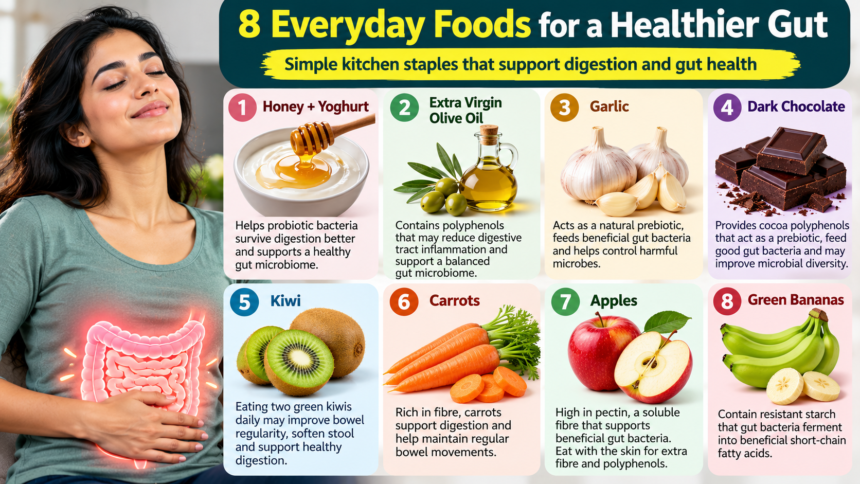
Good gut health plays an important role in digestion, nutrient absorption, bowel regularity and immune function. While digestive problems can have several causes, eating a balanced diet that includes fibre-rich foods and beneficial nutrients can help support the digestive system.
Many foods that may benefit gut health are already available in most kitchens. Everyday ingredients such as yoghurt, garlic, apples and green bananas can contribute to a healthier gut microbiome when included in a balanced diet.
Here are eight foods to consider adding to your regular meals and how they may support digestive health.
1. Yoghurt with Honey
Plain yoghurt containing live cultures can provide beneficial bacteria that support the gut microbiome. Adding a small amount of honey can make it more flavourful, while research suggests honey may help certain probiotic bacteria survive simulated digestion.
Choose plain yoghurt with live cultures and use honey in moderation to avoid excessive added sugar.
2. Extra Virgin Olive Oil
Extra virgin olive oil contains polyphenols, plant compounds that may support beneficial gut microbes and contribute to overall health.
It can be used as a dressing for salads or drizzled over cooked vegetables. Replacing some sources of saturated fat with unsaturated fats, including olive oil, can also form part of a balanced eating pattern.
3. Garlic
Garlic contains fructans, a type of fermentable carbohydrate that can act as a prebiotic by providing food for certain beneficial gut bacteria.
Adding garlic to everyday cooking is a simple way to include these compounds in your diet. However, people with irritable bowel syndrome (IBS) may find that garlic triggers bloating, gas or other digestive symptoms. Such individuals may need to adjust their intake according to their tolerance.
4. Dark Chocolate
Dark chocolate containing at least 70% cocoa provides polyphenols that interact with gut bacteria. These plant compounds are being studied for their potential role in supporting microbial diversity and overall gut health.
Enjoy dark chocolate in moderate portions, as it can still contain added sugar, fat and calories. It should complement, rather than replace, other nutritious foods.
5. Kiwi
Green kiwi is a source of fibre that may help support bowel regularity. Some clinical research suggests that eating two green kiwifruits daily can improve constipation and abdominal comfort in certain people.
Kiwi can be eaten whole as a snack or added to yoghurt and fruit bowls. Individual responses vary, so the amount that works best may depend on personal tolerance and digestive needs.
6. Carrots
Carrots provide dietary fibre that supports digestion and regular bowel movements. They can be eaten raw, steamed, roasted or added to soups and other dishes.
Including carrots alongside a variety of vegetables can help increase overall fibre intake. People who are increasing fibre consumption should do so gradually and drink enough water to help support bowel regularity.
7. Apples
Apples contain pectin, a soluble fibre that can be used by gut bacteria. Eating apples with their skin provides additional fibre and plant compounds, provided the fruit is washed thoroughly under clean running water before eating.
Apples make a convenient snack and can also be added to porridge, salads or yoghurt. Their fibre content may contribute to digestive health as part of a varied diet.
8. Green Bananas
Green or slightly unripe bananas contain more resistant starch than fully ripe bananas. This type of starch passes through the small intestine largely undigested and can be fermented by gut bacteria in the large intestine.
The fermentation process produces short-chain fatty acids, which help support the environment of the colon. Green bananas can be included in meals according to personal preference and digestive tolerance.