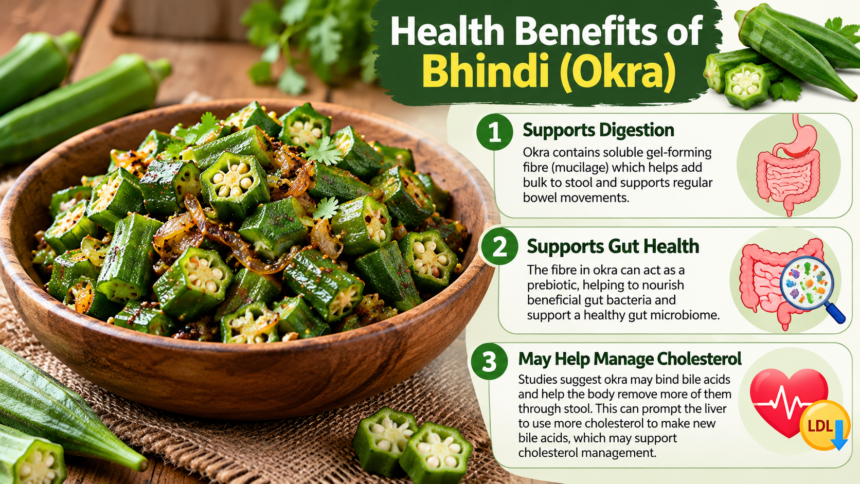
Bhindi, also known as okra, is a popular vegetable in Indian households. Whether prepared as a simple sabzi or included in other dishes, it offers more than flavour and versatility. Its characteristic sticky texture comes from a substance called mucilage, which contains soluble fibre that may support digestion and contribute to cholesterol management.
Dr Saurabh Sethi, an MD and MPH gastroenterologist trained at AIIMS, Harvard and Stanford University, has highlighted the potential health benefits of okra in a post on Instagram. According to his explanation, the soluble fibre in bhindi may support bowel regularity, gut health and the body’s natural processes for managing cholesterol.
Although okra can be a nutritious addition to everyday meals, it is important to understand what research suggests and why eating this vegetable alone cannot guarantee lower cholesterol levels.
1. Bhindi May Help Improve Digestion
One of the key benefits of okra is its soluble fibre content. When this fibre comes into contact with water, it forms a gel-like substance that gives the vegetable its familiar slippery texture.
Soluble fibre helps support normal bowel movements and digestive regularity. Dietary fibre can also help add bulk to stools, making them easier to pass and potentially reducing the risk of constipation when consumed as part of a balanced diet.
Including fibre-rich vegetables such as bhindi in regular meals can therefore help contribute to a healthy digestive system.
2. Okra May Support Gut Health
The gut microbiome consists of microorganisms that live in the digestive tract and play a role in several aspects of health.
Certain types of dietary fibre serve as food for beneficial gut bacteria. Eating a variety of fibre-rich foods can help support these microorganisms and contribute to a balanced gut environment.
Bhindi can be one source of dietary fibre in a varied diet. Combining it with other vegetables, fruits, pulses and whole grains can help increase overall fibre intake and support digestive health.
3. Can Bhindi Help Lower Cholesterol?
Okra’s soluble fibre has attracted interest because of its possible role in cholesterol management.
Dr Sethi has discussed findings from laboratory and animal studies suggesting that okra may help bind bile acids and increase their removal through stools. Bile acids are produced by the liver using cholesterol and help the body digest dietary fats.
When more bile acids are eliminated, the liver may use additional cholesterol to produce replacements. This process provides a possible explanation for how soluble fibre could help influence cholesterol levels.
However, these findings should be interpreted carefully. Results from laboratory and animal studies do not necessarily translate into the same effects in humans. More human research is needed to establish how much eating okra may affect cholesterol levels.
How to Include Bhindi in a Balanced Diet
Bhindi can be prepared in several ways, making it easy to include in everyday meals. Lightly cooked okra, bhindi sabzi and preparations using moderate amounts of oil can all form part of a balanced eating pattern.
For overall heart health, it is also useful to eat a variety of vegetables, whole grains, pulses, nuts and other fibre-rich foods while limiting excessive saturated fat.
People with high cholesterol should not rely on bhindi as a substitute for prescribed medication or medical advice. Cholesterol management may require dietary changes, physical activity and treatment based on individual risk factors.