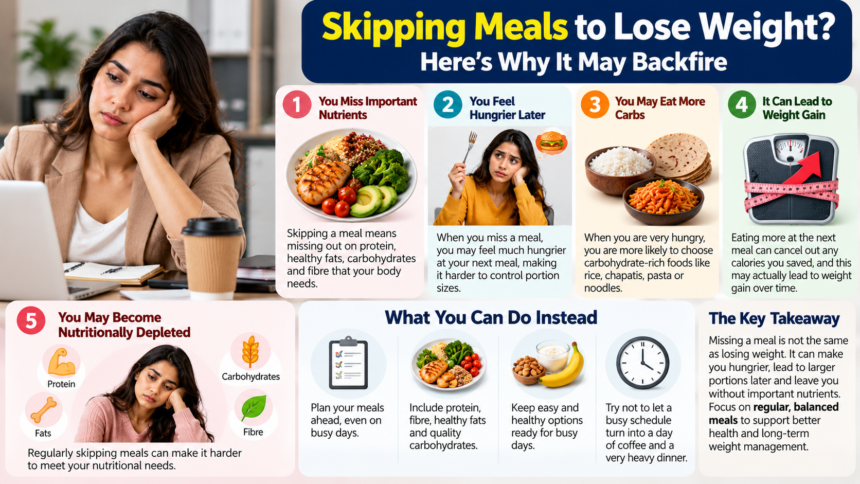
Skipping meals may seem like a convenient way to manage weight, especially on busy days when work, meetings or other responsibilities leave little time to eat. However, regularly missing meals can lead to increased hunger later in the day and make it harder to maintain balanced eating habits.
Why Skipping Meals Can Increase Hunger
When you miss a meal, you may feel significantly hungrier by the time you sit down to eat again. This can make it more difficult to recognise when you have eaten enough or to choose a balanced combination of foods.
When hunger builds up, convenient and filling foods may become more appealing than taking time to prepare a well-rounded meal.
For example, someone who has missed lunch may serve themselves extra rice, additional chapatis or larger portions of pasta and noodles at dinner.
However, skipping a meal does not automatically cause weight gain. Its effects depend on overall eating patterns, food choices, individual needs and other factors. The main concern is that regularly missing meals may make it harder for some people to maintain consistent, balanced nutrition.
How Missing Meals Can Affect Nutritional Intake
Meals provide opportunities to consume nutrients that support energy levels, muscle maintenance, digestion and general health.
When meals are frequently replaced with coffee or other low-nutrient options, it may become more difficult to obtain enough protein, fibre, healthy fats, vitamins and minerals throughout the day.
If this pattern continues, a person may struggle to meet their nutritional needs, particularly when their remaining meals are not varied or balanced.
Rather than focusing only on eating less, Mukerjee encourages people to pay attention to the quality and balance of their meals. Regularly eating a variety of nutritious foods can help support overall well-being.
Is Skipping Meals an Effective Weight-Loss Strategy?
Simply missing a meal is not a reliable shortcut to weight loss. Although skipping meals can reduce food intake in some circumstances, it may also leave people excessively hungry and encourage larger meals or unplanned snacking later.
Intermittent fasting is a separate eating approach involving planned periods of eating and fasting. It is not the same as unintentionally missing lunch because of a busy schedule, and its suitability varies from person to person.
For sustainable weight management, it is more useful to develop eating habits that provide adequate nutrition and fit comfortably into everyday life rather than relying on frequent meal skipping.
Simple Ways to Eat Well on Busy Days
Mukerjee recommends planning meals in advance, noting that even a short period of preparation can make it easier to eat well when schedules become demanding.
Here are some practical habits to consider:
- Plan meals ahead: Decide what you will eat before a busy day begins.
- Keep convenient options available: Stock easy-to-prepare foods such as yoghurt, fruit, nuts, whole-grain bread or other suitable meal components.
- Include a variety of nutrients: Aim to combine protein sources, fibre-rich foods, healthy fats and quality carbohydrates across your meals.
- Avoid relying on coffee alone: Coffee may be part of your routine, but it does not replace the range of nutrients provided by a balanced meal.
- Pay attention to hunger: Allow yourself time to eat and avoid treating prolonged hunger as a requirement for managing weight.
Meals do not need to be elaborate or time-consuming. Simple, convenient choices can help you maintain a more consistent eating routine.