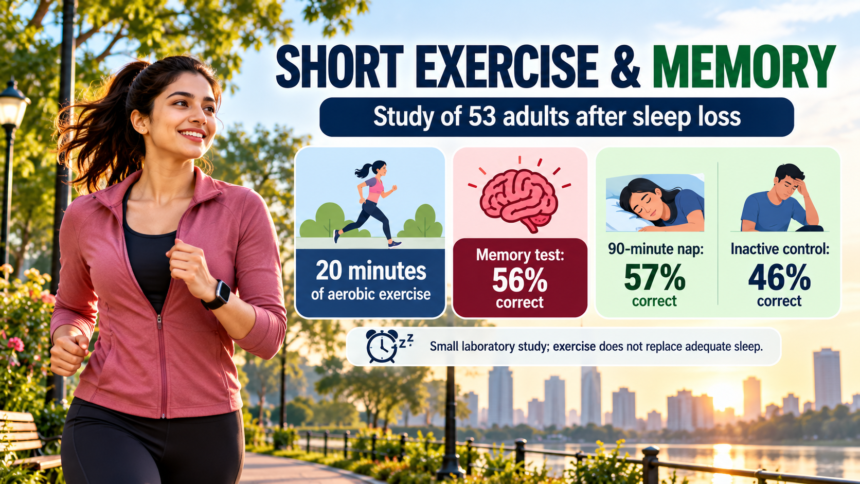
A new study suggests that a short period of aerobic exercise may help preserve certain memory functions after acute sleep deprivation. Researchers found that participants who exercised for 20 minutes performed better on a later memory test than those who remained inactive after being kept awake for an extended period.
The research involved 53 healthy adults aged 18 to 35 who were monitored in a laboratory after being kept awake for 30 hours.
Exercise and Napping Both Showed Benefits
Participants were divided into three groups: one completed 20 minutes of aerobic exercise, another took a 90-minute nap, and a control group sat on an exercise bike without exercising.
On a later image-recognition test, the exercise group correctly identified 56% of the images, while the nap group identified 57%. The control group scored 46%.
The difference between the exercise and nap groups was not statistically significant, meaning the study did not establish that one approach was better than the other.
What Researchers Observed in the Brain
Brain recordings suggested that exercise and napping may support memory through different mechanisms. The researchers said more work is needed to understand these processes and determine whether the findings apply outside a controlled laboratory setting.
The study examined short-term, severe sleep loss in healthy adults. It does not show that exercise can reverse the effects of routinely getting too little sleep.
Why Regular Sleep Still Matters
The findings offer an interesting insight into how the brain responds to sleep deprivation, but they are not a reason to sacrifice rest for exercise.
For everyday wellbeing, maintaining a consistent sleep schedule, allowing enough time for rest and staying physically active remain sensible habits. A short nap or a walk may help someone feel more alert temporarily, but neither replaces adequate sleep.