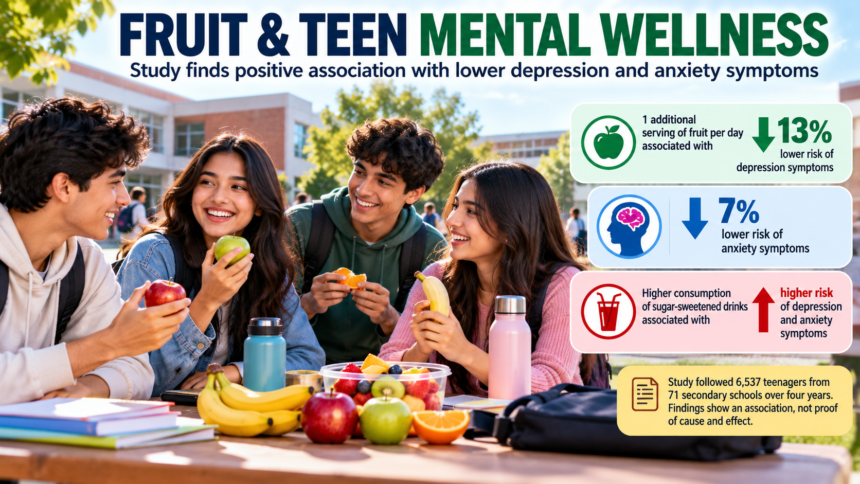
A new Australian study suggests that everyday food choices may be associated with teenagers’ mental health. Researchers found that adolescents who ate more fruit tended to have a lower risk of developing symptoms of depression and anxiety over time.
The research followed 6,537 teenagers from 71 secondary schools across New South Wales, Queensland and Western Australia. Participants were monitored from Year 7 to Year 10, with researchers collecting information about their eating habits over four years.
One Extra Serving of Fruit Showed a Positive Association
The study found that eating one additional serving of fruit each day was associated with a 13% lower risk of depression symptoms and a 7% lower risk of anxiety symptoms during the study period.
Researchers also observed that higher consumption of sugar-sweetened drinks—including soft drinks, cordials and sports drinks—was associated with a greater risk of depression and anxiety symptoms. The association was stronger among boys, particularly for anxiety.
These findings show an association, not proof that fruit directly prevents mental health conditions or that sugary drinks alone cause them.
Why Everyday Eating Habits Matter
Adolescence is a period of significant physical, social and emotional development. During these years, young people often gain more independence over what they eat and drink, making access to nutritious food an important part of a healthy environment.
The researchers accounted for factors including age, sex, physical activity and socioeconomic circumstances. However, other influences can also affect mental health, so diet is only one part of the wider picture.
What Families and Schools Can Take Away
Making fruit, balanced meals and water readily available may help support healthy habits among teenagers. Families and schools can encourage nutritious choices without treating food as a substitute for professional mental health support.
The findings highlight the value of looking at both physical and emotional wellbeing when discussing healthy lifestyles with young people. Further research can help clarify how dietary patterns and mental health influence each other over time.