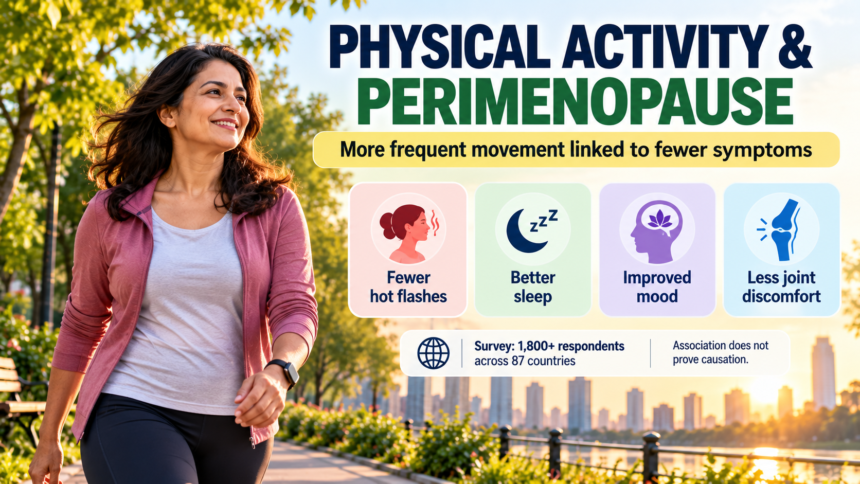
A new international study suggests that women who engage in physical activity more frequently may experience fewer symptoms during perimenopause, the transitional stage before menopause. The findings indicate that regular movement may be particularly associated with lower levels of psychological symptoms, including anxiety, irritability and low mood.
The study included more than 1,800 respondents across 87 countries and six continents who used a women’s health tracking app. Participants completed an online survey about how often they were physically active and the symptoms they experienced.
Researchers Examine Exercise Frequency and Symptoms
Researchers compared participants’ activity frequency with their scores on a menopause symptom assessment scale. The analysis considered physical, psychological and urogenital symptoms, as well as factors such as age, body mass index, smoking status, existing health conditions and healthcare access.
The results showed an association between more frequent physical activity and lower symptom scores across several categories. The relationship appeared especially notable for psychological symptoms.
Why Movement May Matter During Midlife
Perimenopause involves hormonal changes that can affect sleep, mood and everyday comfort. Physical activity is already recognised as an important part of general wellbeing and can support sleep quality, bone strength, muscle health and emotional wellbeing.
The study adds to interest in accessible lifestyle approaches that may help women manage this transition. However, because the research relied on survey responses, it cannot prove that exercise directly caused the lower symptom scores.
What Women Should Take Away
Regular, manageable movement may be a useful part of a healthy routine during midlife. Activities can be adapted to personal comfort, ability and health needs.
Anyone experiencing persistent or disruptive symptoms should consider speaking with a healthcare professional. More research is needed to determine how different types and amounts of activity affect perimenopause symptoms over time.