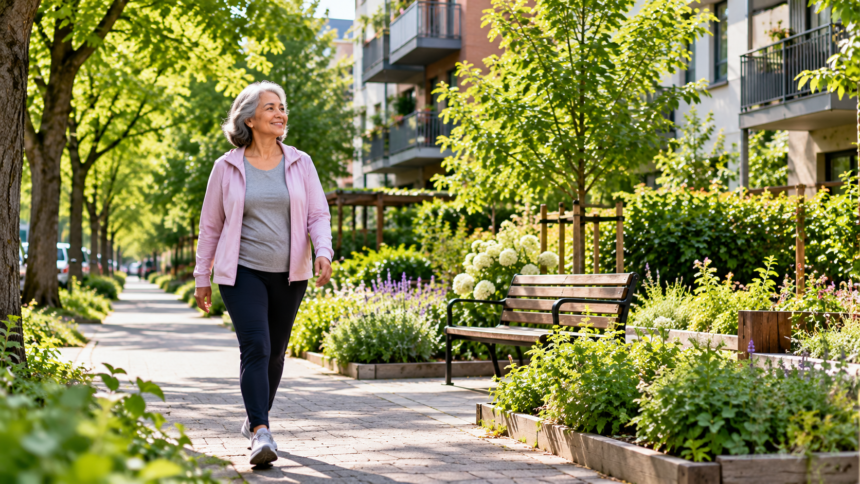
Living in a neighbourhood with trees, gardens and other green spaces may be associated with a lower risk of dementia as people grow older, according to new research . The findings suggest that greenery close to home could be an important part of creating healthier urban environments.
The study followed nearly 3,000 adults aged 60 and older in Stockholm over 16 years, examining the relationship between nearby vegetation and long-term brain health.
Greenery Close to Home May Matter Most
Researchers found that people with more vegetation within 100 metres of their homes had a 20% lower risk of developing dementia over the study period. The association was weaker when researchers examined greenery farther from participants’ homes.
The team assessed vegetation around residential areas using satellite images and geographic mapping. During the 16-year follow-up, 477 participants developed dementia.
How Green Spaces May Benefit Well-Being
Trees, gardens, green courtyards and leafy walking routes may help create calmer surroundings and encourage people to spend time outdoors. Natural environments may also support psychological restoration, reduce stress and promote social interaction.
Green spaces can provide opportunities for walking and other everyday physical activities. They may also help reduce exposure to environmental challenges such as excessive heat, traffic noise and air pollution.
What the Findings Mean for City Planning
The research highlights the potential public-health value of maintaining vegetation close to residential buildings, particularly in densely populated urban areas. Accessible gardens, tree-lined streets and small neighbourhood green spaces may be useful even when larger parks are not nearby.
The association between greenery and lower dementia risk was more pronounced among women in this study. However, further research is needed to understand why this difference appeared.
An Important Note About the Research
The study found an association between nearby greenery and dementia risk; it did not prove that living near trees directly prevents dementia. Although the researchers considered several factors, other influences may still contribute to the findings.
The results nevertheless add to research exploring how residential environments relate to healthy ageing and suggest that accessible green spaces deserve attention in future urban planning.