Dengue remains a major public health concern, and doctors are warning that even young people with strong immunity can develop serious complications from the infection. Medical experts have stressed that good overall health does not guarantee protection against severe dengue.
During a recent health discussion, specialists highlighted the importance of early diagnosis, mosquito control and public awareness. They also explained that vaccination can provide an additional layer of protection, but it cannot replace other preventive measures.
Severe Dengue Symptoms Should Not Be Ignored
Doctors have cautioned people against assuming that a reduction in fever automatically means the infection is improving. Certain warning signs can indicate that dengue is becoming severe and require immediate medical attention.
These include severe abdominal pain, persistent vomiting, bleeding, unusual tiredness and a sudden increase in haematocrit levels. Recognising these symptoms early can help patients receive timely medical care.
Vaccination Alone Is Not Enough
Experts discussed the role of Qdenga, a dengue vaccine developed to provide protection against all four dengue virus serotypes. However, they pointed out that its level of protection may differ across the different serotypes.
India is also working towards developing its own dengue vaccine through research supported by the Indian Council of Medical Research (ICMR).
Doctors emphasised that vaccination should be combined with mosquito-bite prevention and efforts to maintain clean surroundings.
Mosquito Prevention Must Continue Throughout the Year
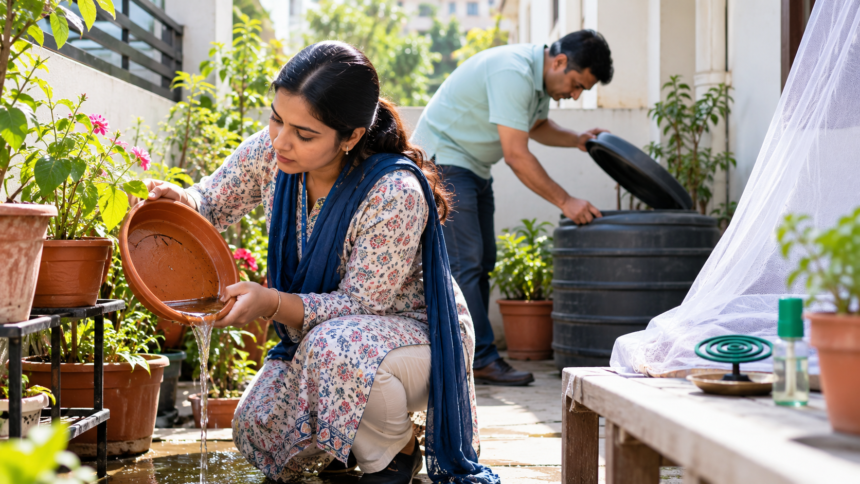
Dengue mosquitoes can breed in even small amounts of stagnant water. Flowerpot trays, discarded coconut shells, old tyres, broken containers, disposable cups and decorative fountains can become potential breeding spots.
Experts have encouraged households and residential communities to regularly inspect gardens, rooftops, parks and shared spaces. Wearing full-sleeved clothing and using appropriate mosquito repellents can also help reduce exposure to mosquito bites.
Doctors say dengue prevention should not be limited to the rainy season. Continuous mosquito control, early identification of symptoms and community participation are essential to reducing the risk of infection throughout the year.