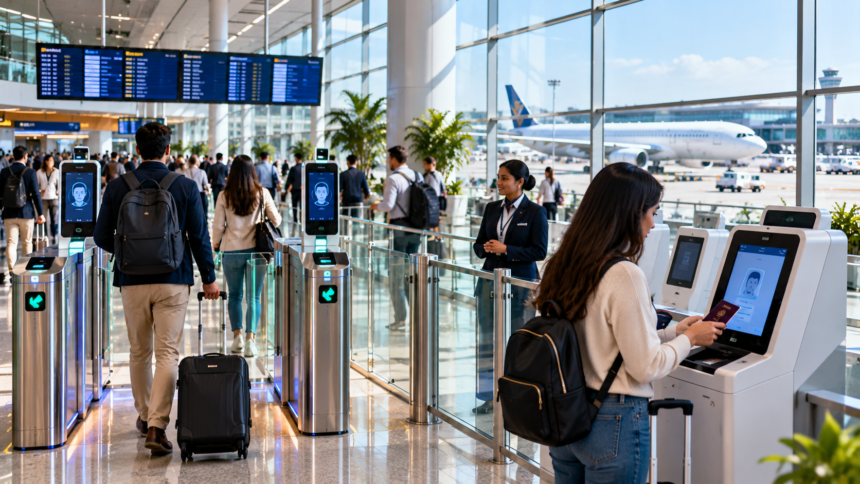
A new global passenger survey by the International Air Transport Association (IATA) highlights how technology and immigration procedures are shaping the future of air travel. The findings show that more passengers are using biometric identification at airports, while complicated entry requirements are discouraging some people from visiting destinations.
The 2026 survey gathered responses from more than 10,000 travellers across over 200 countries. It found that 87% of respondents were satisfied with their overall air travel experience, but border procedures remain a major concern.
Biometric Technology Gaining Popularity
The use of biometric identification is increasing among air passengers. Around 58% of respondents said they had used biometric identification during the previous 12 months, compared with 50% in 2025 and 34% in 2022.
The survey also found that 78% of passengers would be willing to share biometric information if it helped avoid repeated document checks at different stages of their journey.
However, data privacy remains important. Around 59% expressed concern about data breaches, while others were worried about information being shared with third parties or not knowing how their personal data would be used.
Complicated Immigration Rules Affect Travel Decisions
One of the key findings concerns visa and immigration requirements. 43% of respondents said entry requirements had discouraged them from travelling to a particular destination, up from 33% in the previous year’s survey.
Complex procedures were the main concern among travellers who had been discouraged from visiting a destination. The findings suggest that simpler application processes could make international travel more accessible.
Travellers Prefer Digital Visa Applications
The survey also points to growing demand for online immigration services. Around 60% of respondents preferred applying for visas online rather than visiting an embassy or consulate in person.
In addition, 86% said they would be willing to submit immigration information electronically before travelling. The results highlight passengers’ interest in smoother digital processes, provided their personal information is properly protected.
Artificial Intelligence Also Influencing Travel Planning
The survey found that 49% of respondents had used artificial intelligence while organising their trips. Adoption varied by region, reaching 72% in the Middle East and 35% in Europe.
The findings indicate that digital tools, biometric systems and simpler border procedures are becoming increasingly important to the passenger experience.