Scientists have identified special stem cells and biological signals that play an important role in keeping skin healthy and naturally moisturised. The discovery could open new possibilities for treating persistent dry skin and certain skin conditions in the future.
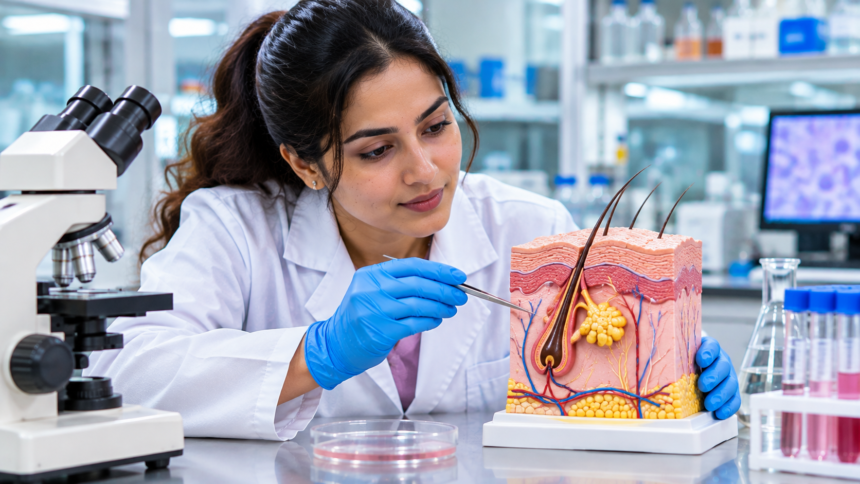
The research, published in November 2026, focuses on sebaceous glands, tiny oil-producing structures attached to hair follicles. These glands produce sebum, a natural oily substance that protects the skin and hair from excessive moisture loss.
The findings could be particularly important for understanding why skin becomes drier with age and how its natural protective system can be supported.
Scientists Identify Important Skin Stem Cells
Researchers identified a group of stem cells marked by a protein called KROX20. These cells help develop and maintain sebaceous glands, allowing them to continue producing the natural oils required for healthy skin.
The team also discovered that these cells regulate an important biological communication system known as the Notch signalling pathway.
When the researchers disrupted this process in laboratory models, the sebaceous glands became smaller and the skin lost more water, resulting in dryness.
New Research Shows Promising Results
One of the most interesting findings involved activating the Notch signalling pathway.
In laboratory experiments, researchers used a topical experimental compound to increase Notch activity. This helped restore the structure of sebaceous glands and reduced water loss through the skin.
The results suggest that maintaining the function of these glands could become a potential approach to treating certain forms of dry skin.
Why This Discovery Matters
Sebum plays an important role in maintaining the skin’s natural protective barrier. When its production becomes insufficient, the skin may become dry and more vulnerable to irritation.
The discovery provides scientists with a better understanding of how skin oil production is regulated and why problems with this process can contribute to dermatological conditions.