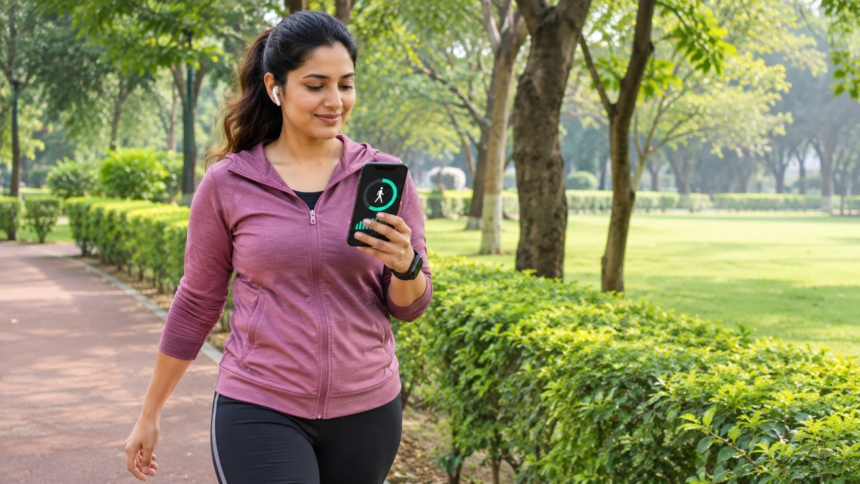
A new study has found that personalised reminders from fitness apps may help people become more physically active. The research suggests that small digital prompts encouraging users to move can produce measurable improvements in daily activity, even without major changes to their regular routine.
The study examined how different types of reminders influenced the walking habits of people using Fitbit devices. Researchers wanted to understand whether personalised notifications could encourage users to take more steps compared with receiving no reminders.
Personalised Reminders Show Promising Results
The study initially enrolled 13,463 Fitbit users, with 7,711 participants included in the final analysis. Their average age was approximately 42 years, and women accounted for 86.3% of the analysed participants.
Researchers divided participants into four groups: one received no reminders, another received random notifications, a third received fixed reminders based on an initial survey, and the fourth received personalised reminders generated through a learning-based system.
Daily Steps Increased With Adaptive Notifications
After one month, participants receiving personalised reminders recorded an average of 296 additional steps per day compared with those receiving no reminders.
At the two-month mark, the difference stood at approximately 210 additional steps daily. The results suggest that reminders adapted to individual activity patterns may encourage people to move more consistently.
However, the differences between personalised reminders and some other reminder approaches were not statistically clear at two months.
What Does This Mean for Everyday Fitness?
The findings highlight how technology can support healthier daily habits. Fitness applications may help users become more aware of their activity levels and encourage movement through timely notifications.
However, researchers caution that the improvement was modest and the study does not establish long-term health benefits. The participants were also existing Fitbit users who voluntarily joined the research.
The findings nevertheless offer an interesting insight into how personalised technology could become a useful part of everyday fitness and preventive healthcare.