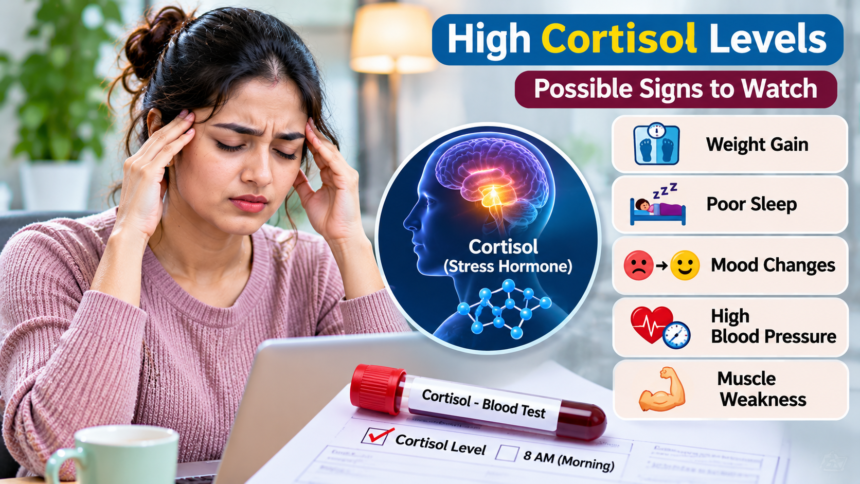
A morning blood test showing elevated cortisol levels can raise concerns about stress, sleep problems and hormonal health. However, medical experts say that a higher-than-normal reading does not automatically indicate a serious condition.
Cortisol, commonly known as the stress hormone, plays an important role in regulating blood pressure, blood sugar, metabolism and the body’s sleep-wake cycle.
Why Cortisol Levels Are Naturally Higher in the Morning
Cortisol follows a natural daily pattern. Its levels begin rising during the early morning hours, generally reaching their highest point between 7 AM and 9 AM before gradually declining throughout the day.
An endocrinologist explains that this morning increase helps the body wake up and prepare for daily activities.
A typical 8 AM blood cortisol reading may fall between 5 and 25 µg/dL, although the normal reference range varies depending on the laboratory and testing method.
What Can Cause High Cortisol Levels?
Several factors can temporarily increase cortisol levels, including:
- Physical or emotional stress.
- Poor sleep or irregular sleeping patterns.
- Intense physical activity.
- Pain, infections or other illnesses.
- Certain medications, particularly steroid-based medicines.
Persistently excessive cortisol production can sometimes indicate Cushing’s syndrome, a hormonal condition associated with prolonged exposure to high cortisol levels.
Symptoms That May Require Medical Attention
Doctors recommend medical evaluation when elevated cortisol levels occur alongside progressively developing symptoms such as:
- Unexplained weight gain, particularly around the abdomen and face.
- Noticeable facial rounding.
- Purple stretch marks on the abdomen.
- Easy bruising.
- Muscle weakness.
- Increased blood pressure or blood sugar.
- Sleep disturbances and mood changes.
Why One Blood Test Is Not Enough
Doctors caution that a single elevated morning cortisol result cannot confirm Cushing’s syndrome. Additional hormonal investigations may be required to identify the actual cause.
People with persistently abnormal results and concerning symptoms should consult an endocrinologist rather than interpreting their reports independently.
The findings highlight why understanding hormone levels, testing conditions and individual symptoms is important when evaluating hormonal health.