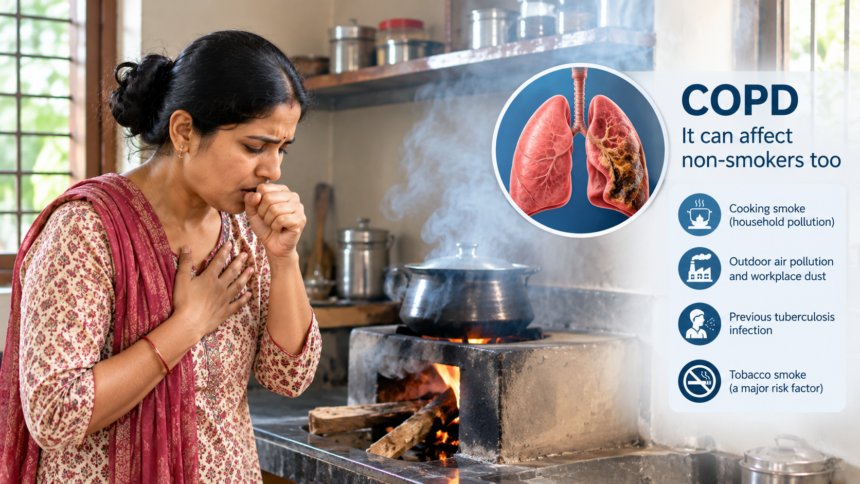
Chronic Obstructive Pulmonary Disease (COPD), a serious condition affecting the lungs and breathing, is increasingly drawing attention because it can also affect people who have never smoked. On the occasion of World COPD Day, respiratory specialists have highlighted the risks associated with household air pollution, cooking smoke, occupational exposure and previous tuberculosis infections.
Doctors are particularly concerned that women and non-smokers may overlook early symptoms because they do not consider themselves at risk.
Household Pollution Can Damage Lung Health
Tobacco smoking remains an important risk factor for COPD, but it is not the only cause. Long-term exposure to smoke from traditional cooking fuels, indoor pollution, outdoor air pollution and workplace dust can also contribute to lung damage.
Women who spend extended periods around cooking smoke may face additional respiratory risks. People with a history of tuberculosis can also experience long-term lung complications.
Warning Signs People Should Recognise
Some common symptoms of COPD include:
- Persistent coughing, sometimes with mucus.
- Breathlessness during everyday activities.
- Wheezing or difficulty breathing.
- Repeated chest infections.
- Ongoing respiratory discomfort.
These symptoms can have several causes, so medical assessment is important rather than assuming they indicate COPD.
Early Diagnosis Can Improve Quality of Life
The Global Initiative for Chronic Obstructive Lung Disease has highlighted early diagnosis and treatment as the central message of its 2026 awareness campaign.
Doctors use a breathing test called spirometry to assess airflow and help confirm COPD. Although the condition has no complete cure, appropriate treatment, reduced exposure to lung irritants and respiratory rehabilitation can help manage symptoms and improve quality of life.
COPD causes approximately three million deaths worldwide every year, making awareness, timely diagnosis and access to treatment important public health priorities.